ctrl
ctrl 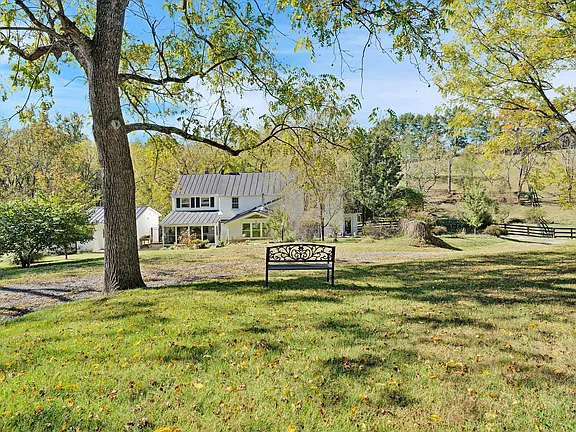
6 beds 5 baths 3,064 sqft
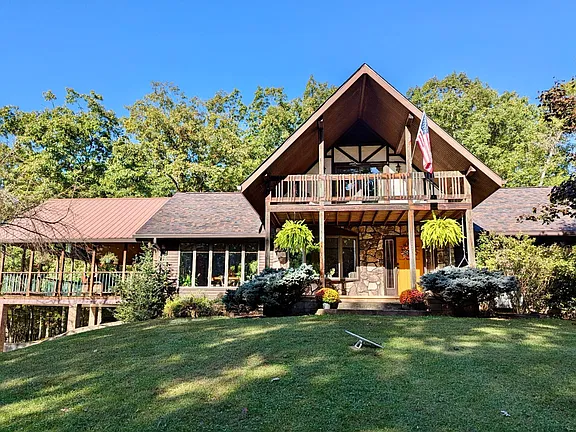
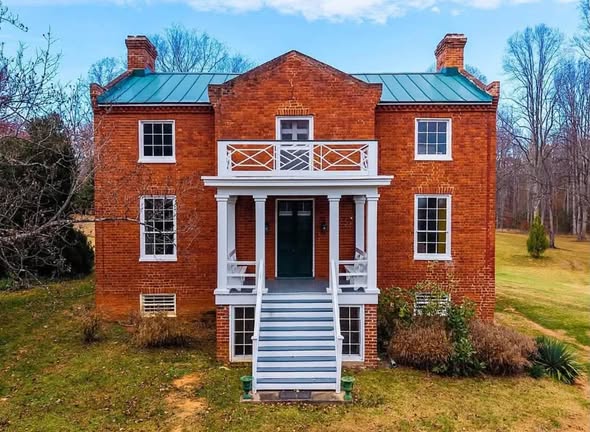
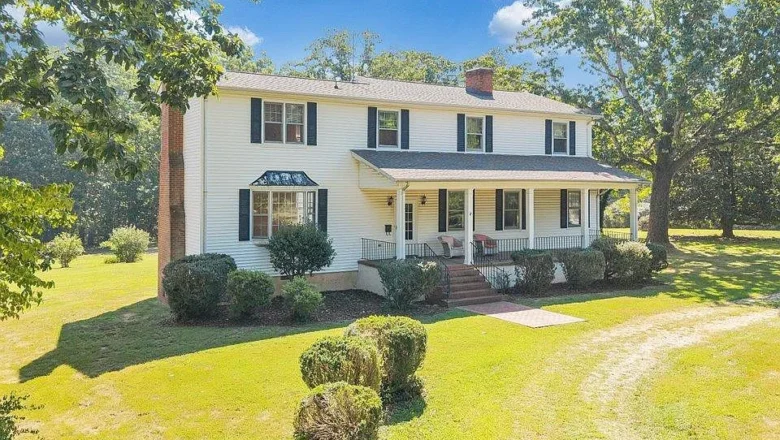
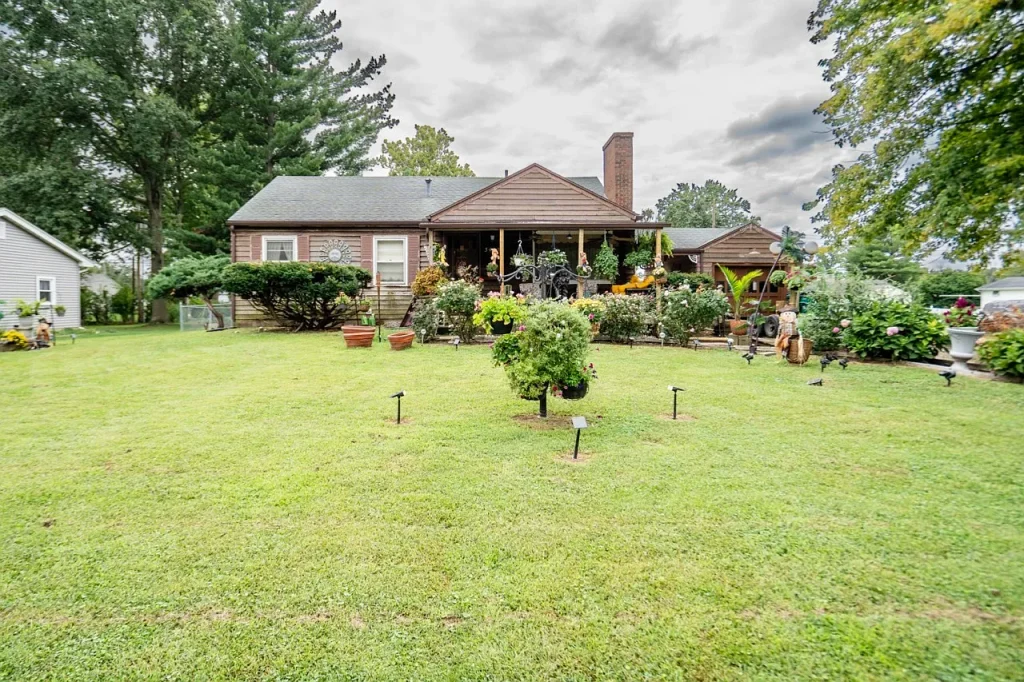
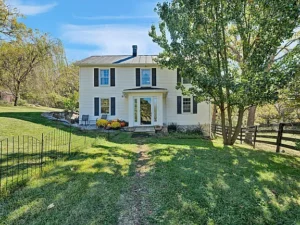
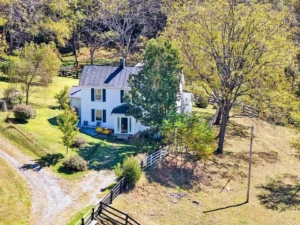
Chimney Hollow Farm, a Shenandoah Valley homestead built around a log dwelling from about 1750, set on 26.54 acres near Staunton, Virginia, with a spring, a stream, a barn, and long views.
Before highways crossed the Shenandoah Valley, travelers moved along dirt roads on foot, on horseback, and in wagons.
One of those old routes ran between Staunton and Greenville. Farmers, settlers, and families looking for a new start passed this way for generations.
Along that historic corridor, on about 26.5 acres, stands a property known in recent years as Chimney Hollow Farm.
At its heart is a two-story log home believed to date to about 1750. Over the centuries, the house grew with the people who lived in it. Today it offers six bedrooms, five bathrooms, and a setting that feels far removed, while Staunton is just a short drive away.
Let’s explore this remarkable Valley homestead.
Property Overview
- Name: Chimney Hollow Farm
- Location: Between Staunton and Greenville, Shenandoah Valley, Virginia
- Bedrooms: 6
- Bathrooms: 5
- Living area: 3,064 square feet
- Oldest section: Two-story log dwelling believed to date to about 1750
- Later additions: Late 19th-century farmhouse section and a 1994 addition
- Lot size: 26.54 acres
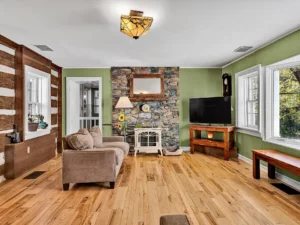
- Historic features: Exposed logwork, heart-pine floors, two chimneys
- Water features: Spring and stream
- Outbuildings: Barn, shop, and additional outbuildings
- Land use: Open acreage suited for horses, livestock, or gardens
- Setting: Long views and quiet countryside, a short drive to Staunton
A Home From Colonial Virginia
Around 1750, the Shenandoah Valley was still the edge of the colonial frontier.
Settlers, many of them Scots-Irish and German, were moving south through the Valley, clearing land, building log homes, and establishing farms.
A two-story log dwelling from that period was a substantial home. It reflected the hard work and ambition of the family that built it, at a time when most structures were far simpler.
That this house still stands, nearly three centuries later, is remarkable.
The Log Dwelling
The original section of the home is a two-story log dwelling.
Log construction was common in the Valley during the colonial period. Builders used hewn logs, joined at the corners with carefully cut notches, and filled the gaps with chinking.
Inside, exposed logwork remains visible today, giving the rooms a depth of character that no modern material can replicate.
Running your hand along those logs means touching wood shaped by human hands before the American Revolution.
The Late 19th-Century Farmhouse
As the decades passed, the home grew.
In the late 1800s, a farmhouse section was added, bringing heart-pine floors and the familiar lines of a Shenandoah Valley homestead.
Heart pine comes from the dense center of old-growth longleaf pine trees. It is prized for its rich amber color and durability. Much of the old-growth longleaf pine forest that produced it is now gone, which makes original heart-pine floors especially valuable.
The 1994 Addition
In 1994, a newer addition created space for modern living.
This section likely provides the conveniences today’s families expect, such as updated bathrooms, larger rooms, and modern systems, while allowing the older sections to keep their historic character.
The result is a home that tells its story in layers, each one reflecting a different era.
A House That Grew With Its People
Rather than being frozen in time, this home evolved.
Each generation added something new to meet its needs. That is how many old Valley farmhouses developed, and it is part of what makes them so interesting to live in.
Walking from the log section to the farmhouse to the modern addition is like walking through nearly three centuries of American life.
Six Bedrooms
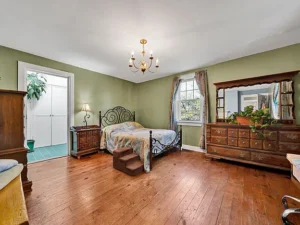
The home offers six bedrooms.
That is plenty of space for a large family, multi-generational living, guests, home offices, or hobby rooms.
Bedrooms in the older sections may have lower ceilings, sloped walls, or charming quirks, while those in the 1994 addition are likely more conventional in size and layout.
Five Bathrooms
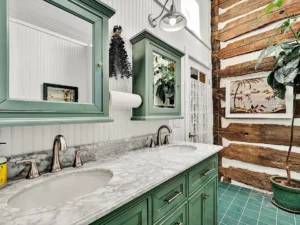
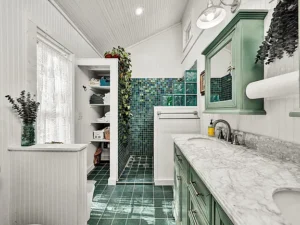
Five bathrooms is a generous number, especially for a home with such deep historic roots.
It makes the house far more practical for a large household or for hosting guests.
Buyers should check the fixtures, plumbing, and ventilation in each bathroom, particularly any located in the older sections.
Two Chimneys
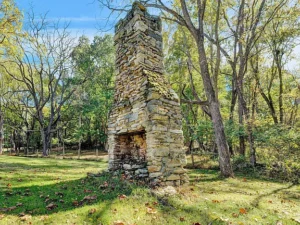
The property’s name fits. Two chimneys help preserve the character of the home’s earlier chapters.
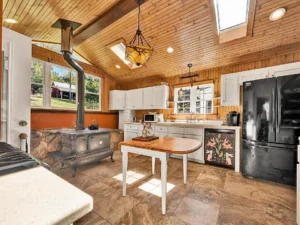
In colonial and 19th-century homes, chimneys were the center of daily life, used for heating and cooking.
Every chimney and fireplace should be inspected by a certified chimney sweep before use. Old chimneys often need relining or masonry repair to be safe.
Heart-Pine Floors
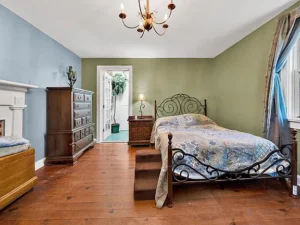
The old floors throughout the farmhouse section are one of the home’s treasures.
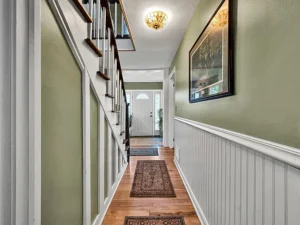
Heart-pine floors develop a deep patina over time. Their natural wear tells the story of everyone who has walked across them.
Gentle cleaning and occasional refinishing can keep them beautiful for many more years.
26.54 Acres
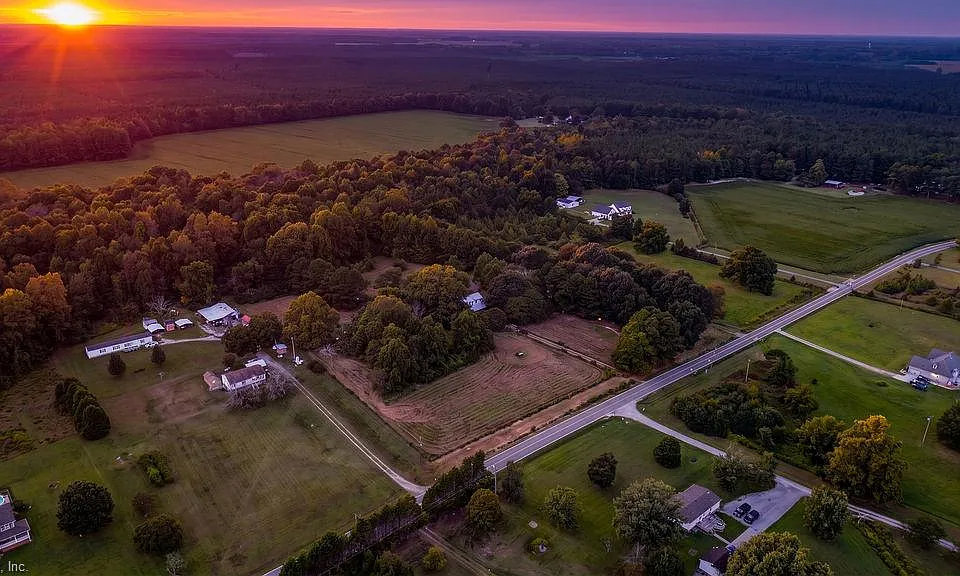
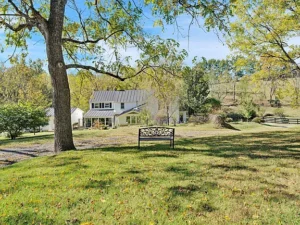
The home sits on approximately 26.5 acres of Shenandoah Valley countryside.
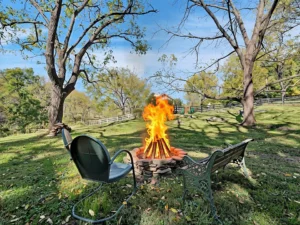
That land offers privacy, space, and long views. Open acreage supports horses, livestock, gardens, or simply room to breathe.
It is the kind of property that allows owners to live close to the land, just as the families who came before them did.
The Spring and Stream
A spring and a stream move through the property.
In colonial times, a reliable spring was often the reason a homestead was built where it was. Water meant life for families, livestock, and crops.
Today, the spring and stream add beauty, wildlife, and a peaceful soundtrack to daily life.
Buyers should ask how the home’s water is supplied, whether by well, spring, or both, and test the water quality.
Horses and Livestock
The open acreage is suited for horses and livestock.
The Shenandoah Valley has a long agricultural tradition, and this property continues it.
Buyers planning to keep animals should check fencing, pasture condition, and water access, and confirm Augusta County regulations.
Gardens
Valley soil has supported farms for centuries.
With plenty of open land, there is room for a large vegetable garden, an orchard, berry patches, or a heritage garden with plants that settlers might have grown.
The Barn
The property includes a barn that carries forward the land’s agricultural tradition.
Barns are essential on a working farm, providing shelter for animals, storage for hay and equipment, and space for projects.
Buyers should inspect the barn’s roof, foundation, and framing, and ask about electricity and water.
The Shop and Outbuildings
A shop and additional outbuildings add even more versatility.
A shop is perfect for woodworking, repairs, metalwork, or equipment maintenance. Other outbuildings can serve as storage, animal shelters, or creative spaces.
Long Views
The Shenandoah Valley is famous for its scenery, with the Blue Ridge Mountains to the east and the Alleghenies to the west.
Long views from the property bring that landscape right to your doorstep, changing with every season and every sunset.
Caring for a Log Home
Owning a log home from the 1700s comes with special responsibilities.
Logs need protection from moisture, insects, and rot. Chinking may need periodic repair. Sill logs, the lowest logs that rest on the foundation, are especially important to inspect.
Working with contractors experienced in historic log structures is essential. Traditional materials and methods often perform better than modern substitutes.
Possible Projects
- Inspecting and repairing log chinking
- Checking sill logs and foundation
- Chimney inspection and relining
- Refinishing heart-pine floors
- Reviewing electrical and plumbing systems in older sections
- Evaluating heating and cooling
- Barn and outbuilding repairs
- Fencing for horses or livestock
- Planting gardens or an orchard
- Researching the home’s full history
Owner-Occupant Potential
This property is ideal for a buyer who wants to live a rooted, meaningful life in the country.
Six bedrooms and five bathrooms make it practical for a large family. The land and outbuildings support a homestead or small farm. And Staunton nearby provides schools, shopping, and medical care.
Retreat and Rental Potential
The Shenandoah Valley attracts visitors throughout the year for its scenery, history, and outdoor recreation.
A colonial-era log home on acreage could appeal to guests seeking a unique stay. Buyers should check Augusta County rules for short-term rentals.
Financing Options
- Conventional loans: A common choice. Lenders may limit how much land value they finance.
- FHA loans: Offer lower down payments for owner-occupants, subject to property condition standards.
- FHA 203(k) loans: Allow buyers to finance purchase and repairs together, useful for historic homes.
- USDA loans: May be available in eligible rural areas, with limits on acreage, income, and price.
- VA loans: Eligible veterans may buy with little or no down payment, subject to appraisal standards.
- Farm and land lenders: Agricultural lenders often understand rural acreage and outbuildings.
Historic homes can be challenging to appraise because of limited comparables. A lender familiar with rural Virginia properties can help.
Insurance Considerations
Insuring a log home from the 1700s requires careful planning.
Replacing historic logwork and heart-pine floors can be expensive. Some insurers offer special policies for historic homes.
Chimneys, wood construction, livestock, and outbuildings may all affect coverage.
Questions to Ask Before Buying
- What is the exact address and price?
- What documentation exists about the log dwelling’s age?
- What is the home’s water source?
- When was the septic last inspected?
- When were the electrical and plumbing updated?
- Which fireplaces are functional?
- What condition are the logs and chinking in?
- Has the home ever had insect damage?
- What is the condition of the barn and outbuildings?
- Are there any easements on the property?
- Is the land in a land-use tax program?
- What are the annual property taxes?
Inspection Is Essential
A home with sections from 1750, the late 1800s, and 1994 needs a thorough inspection.
Buyers should hire an inspector experienced with historic and log homes, along with a chimney inspection, wood-destroying insect inspection, and well and septic evaluations.
About Staunton and the Shenandoah Valley
Staunton is one of the most charming small cities in Virginia.
It is known for its historic downtown, the Woodrow Wilson Presidential Library at his birthplace, the Frontier Culture Museum, and the American Shakespeare Center’s Blackfriars Playhouse.
The surrounding Shenandoah Valley offers farmland, mountains, wineries, and outdoor recreation, with Shenandoah National Park and the Blue Ridge Parkway nearby.
Value in Context
Properties with original colonial-era log construction are increasingly rare.
Combine that with heart-pine floors, modern living space, six bedrooms, five bathrooms, 26 acres, a spring, a stream, and agricultural outbuildings, and this is a truly unusual offering.
Buyers should compare similar historic farms in Augusta County and factor in preservation costs.
Final Thoughts
Chimney Hollow Farm is more than an old house.
It is a home shaped by nearly three centuries of use, care, and change, from a colonial log dwelling to a Valley farmhouse to a modern family home.
With its spring, stream, barn, long views, and rich history, it offers a rare chance to become the next steward of a true Shenandoah Valley place.
View the full listing on Zillow
Our website is designed for informational and entertainment purposes only. We are not a real estate brokerage or licensed contracting service. We operate solely as an independent blog, curating interesting houses, DIY guides, and practical home tips found across the internet. All decisions related to real estate transactions or home renovations should be made in consultation with licensed professionals. We do not guarantee the ongoing accuracy or availability of external property listings, as market statuses change rapidly. Please use our content at your own discretion.