67 Acres, a Creek, and a 1900 Farmhouse in Cedarville, West Virginia — Listed at $140,000
Every so often a rural listing comes along where the house is almost beside the point. At 390 Lower Level Run Rd in Cedarville, West Virginia, a modest 1,100-square-foot farmhouse built in 1900 sits on 67 wooded, hillside acres with a creek running through the property. The asking price is $140,000, which works out to roughly $127 per square foot on the house alone — and effectively means the acreage comes attached to a livable, character-rich homestead rather than the other way around.
For buyers priced out of land markets in the Northeast, the Mid-Atlantic, or the Southeast, this is the kind of listing that resets expectations about what real acreage costs in the eastern United States.
A Farmhouse That Still Reads Like a Farmhouse
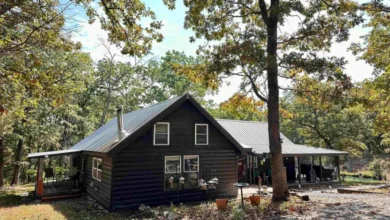
At 1,100 square feet, this isn’t a large house — it’s a well-preserved slice of early-20th-century rural life. The listing highlights features that speak directly to that history: a hand-cut stone cellar, a separate wash house, and a covered porch, all details that place this home firmly in an era when farms were largely self-sufficient.
Three bedrooms, one full bathroom, and a dining room round out the main floor plan, with gas heating and no basement beyond the standalone stone cellar structure. The exterior carries wood siding and a metal roof — the metal roof in particular is worth noting, since it’s typically one of the more expensive line items on an older rural property and a functioning one removes a major near-term capital expense.
Buyers interested in restoring or preserving genuine period details, rather than gutting a home to start fresh, will find a lot to work with here. Hand-cut stone cellars are not reproducible at any reasonable cost today. Neither is a purpose-built wash house. These are the elements that separate a genuine historic homestead from a house that simply happens to be old.
What 1900 Construction Actually Means for a Buyer
A home built in 1900 comes with a specific set of due diligence items that buyers should plan for from the outset:
- Knob-and-tube or otherwise outdated wiring, which can affect both safety and homeowners insurance eligibility
- Galvanized or older supply plumbing that may need replacement
- Lead-based paint, which requires federally mandated disclosure on any home built before 1978
- Foundation and sill conditions, especially on a hillside parcel where drainage matters
- Insulation levels, which in original 1900 construction are frequently minimal or absent
None of these are deal-breakers. They are budget items. The critical mistake buyers make on period rural homes is assuming the purchase price is the total cost of entry, rather than the starting point.
Sixty-Seven Acres Is the Real Headline
This is the number that sets the listing apart: 67 acres, wooded and hillside, with a creek running through the property and mountain, private, and scenic views called out directly in the listing data.
At this scale, the land supports genuine options rather than theoretical ones:
- Hunting. West Virginia’s whitetail deer, turkey, and small game seasons are well established, and 67 contiguous wooded acres is enough to manage habitat meaningfully rather than simply hunting whatever passes through.
- Timber management. Hardwood stands in central West Virginia can carry real value. A timber cruise by a licensed forester before closing tells a buyer whether the standing timber represents a meaningful portion of the purchase price.
- Small-scale farming or livestock. Hillside and wooded terrain limits row cropping, but pasture clearing, orchards, and rotational grazing on cleared sections are all realistic.
- Long-term privacy. Increasingly difficult to find at this price point anywhere east of the Mississippi.
A shed and utility area are already in place for equipment and storage, which matters more than it sounds — building outbuildings from scratch on rural acreage is neither fast nor cheap.
The Creek
A year-round or seasonal creek adds real utility to acreage: livestock water, recreation, and habitat value. It also introduces a due diligence item. Buyers should determine whether any portion of the buildable area falls within a FEMA-designated Special Flood Hazard Area, because that determination drives whether flood insurance is required by a lender. Standard homeowners insurance policies do not cover flood damage, and a separate flood insurance policy through the National Flood Insurance Program or a private carrier is the only way to transfer that risk. On a hillside parcel the house is often well above the creek — but that needs to be confirmed on paper, not assumed from a walkthrough.
The Practical Details
Water comes from a private well, and the property runs on a private septic system. Both are standard for rural Gilmer County and both warrant inspection: a well flow test and water quality panel, and a septic inspection with tank location and drain field condition documented.
Buyers should confirm the current status of electric service directly with the seller, as the listing data doesn’t specify an active connection. This is worth clarifying early, before finalizing any purchase plans, because bringing power to a rural parcel from a distant service point can be a five-figure expense.
Annual property taxes are notably low at just $717, reflecting both the rural tax rate and the modest tax-assessed value of $64,300. For buyers accustomed to five-figure annual property tax bills in the Northeast or Midwest, this alone materially changes the long-term carrying cost of ownership.
The Numbers
- Price: $140,000 ($127 per square foot)
- Location: 390 Lower Level Run Rd, Cedarville, WV 26611
- Home Size: 1,100 sq ft
- Bedrooms / Bathrooms: 3 / 1 full
- Lot Size: 67 acres, wooded hillside
- Year Built: 1900
- Water / Sewer: Private well / private septic
- Heating: Gas
- Historic Features: Hand-cut stone cellar, wash house
- Water Feature: Creek
- HOA: None
- Annual Taxes: $717
Financing a Rural Historic Property
This is where buyers of acreage properties most often get surprised. A $140,000 purchase price sits comfortably below conforming loan limits, so a jumbo loan is not in play — but the property type introduces its own complications.
USDA Rural Development Loans
Cedarville almost certainly falls within a USDA-eligible rural area, and the USDA Single Family Housing Guaranteed Loan Program offers zero-down financing with competitive rates for income-qualified buyers. The catch on large-acreage properties is that USDA guidelines generally require the land value not to exceed a defined share of the total property value, and the property must be primarily residential rather than income-producing. On 67 acres, an appraiser’s allocation between house value and land value becomes the deciding factor.
FHA and the FHA 203k Renovation Loan
An FHA loan requires the property to meet minimum property standards at closing, which a 1900 farmhouse with unconfirmed electrical service may not. The more realistic path is an FHA 203k renovation loan, which rolls the purchase price and the renovation budget into a single mortgage. For a period home needing electrical, plumbing, or insulation work, a 203k can be the difference between a viable purchase and a cash-only deal. The standard 203k handles structural work; the limited version caps out at smaller cosmetic budgets.
VA Loans
Eligible veterans and service members can pursue a VA loan with no down payment and no mortgage insurance. VA appraisals include a minimum property requirement review, so the same electrical and safety items apply. VA financing on large acreage is possible but the appraiser must be able to find comparable sales — which in sparsely populated Gilmer County can extend timelines.
Cash, Land Loans, and Later Refinancing
Many rural acreage transactions at this price point close in cash or through a local portfolio lender, because regional banks in West Virginia understand the collateral in a way national underwriters often do not. Buyers who close with cash or a short-term land loan frequently refinance into conventional financing or tap a home equity line of credit once renovations are complete and the appraised value reflects the improvements.
A Due Diligence Checklist Before You Make an Offer
- Order a boundary survey — 67 acres of hillside timber rarely has clearly marked lines.
- Run a title search specifically for severed mineral rights, which are extremely common in West Virginia and may not convey with the surface.
- Confirm deeded, recorded access to the parcel rather than a handshake right-of-way.
- Verify electric service status and the cost of any required extension.
- Well flow test and water quality panel.
- Septic inspection with drain field located and documented.
- FEMA flood zone determination given the creek.
- Insurance quote before removing contingencies — older rural homes with wood siding and outdated wiring can be difficult to insure at standard rates.
- Timber cruise if the standing hardwood is a material part of your valuation.
- Structural and pest inspection focused on the sill, foundation, and stone cellar.
Why Cedarville
Cedarville sits in Gilmer County, one of the most sparsely populated corners of West Virginia, close to Glenville and Glenville State University while remaining genuinely rural. The area’s National Register-listed sites, including the nearby 1923 Cedarville School, reflect a community that has preserved its early-20th-century character even as the broader region has changed.
For a buyer specifically searching for real acreage, historic homestead details, and privacy measured in dozens of acres rather than a handful, Cedarville offers scale that is genuinely difficult to find anywhere in the eastern United States at this price.
Interested in touring 390 Lower Level Run Rd or want more details on the Cedarville area? Reach out to the listing agent through the Zillow listing below.


Interested in touring 390 Lower Level Run Rd or want more details on the Cedarville area? Reach out to the listing agent below in ZILLOW