Houses
A 1927 Country Home on Almost Two Acres in Hertford, North Carolina, With Two Covered Porches for $120,000

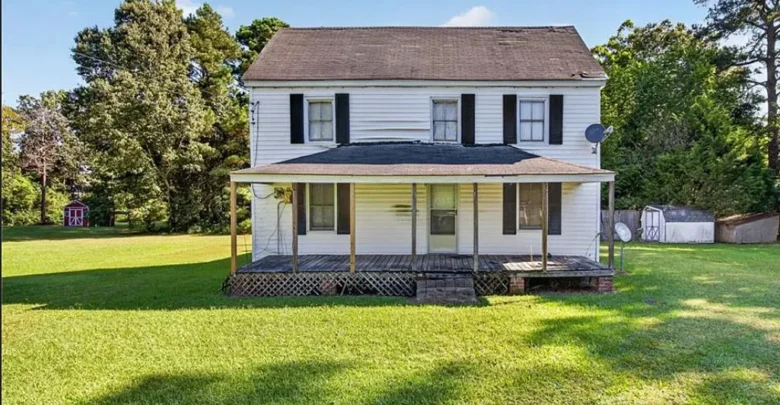
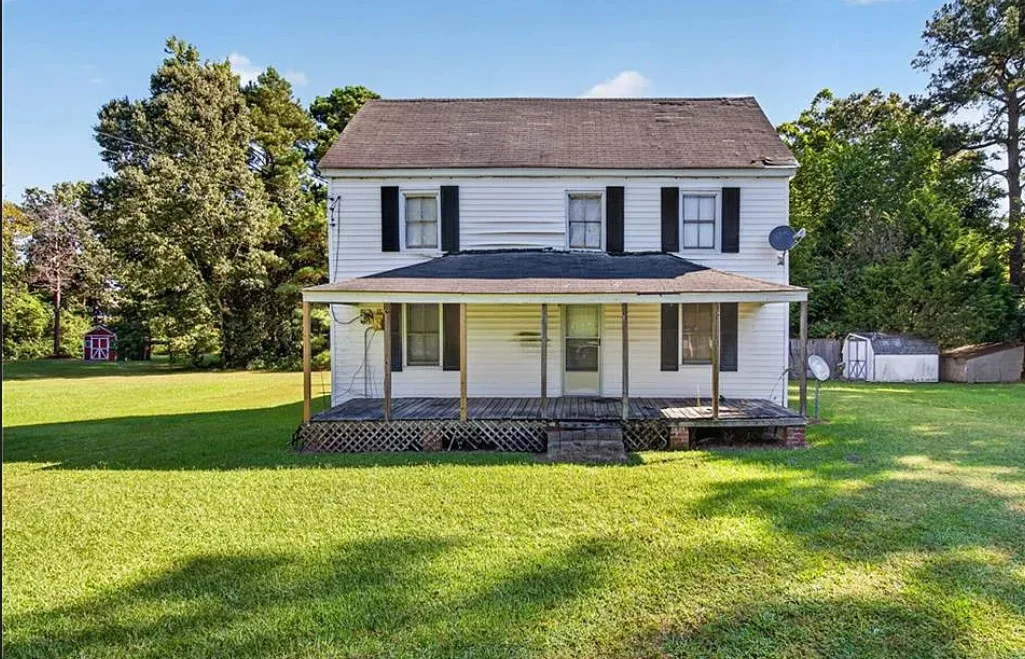
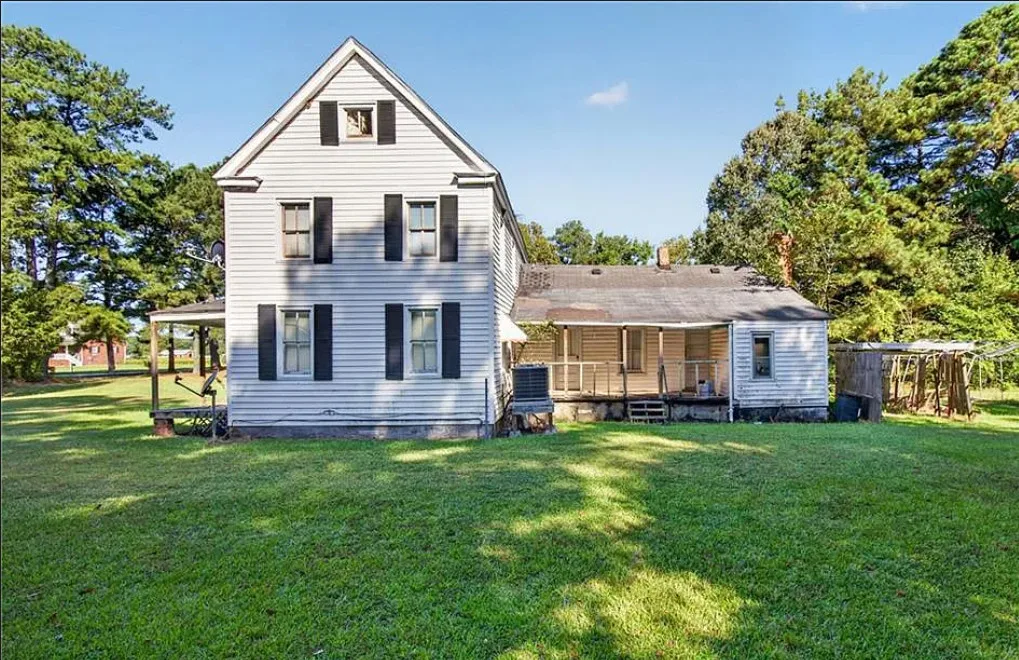
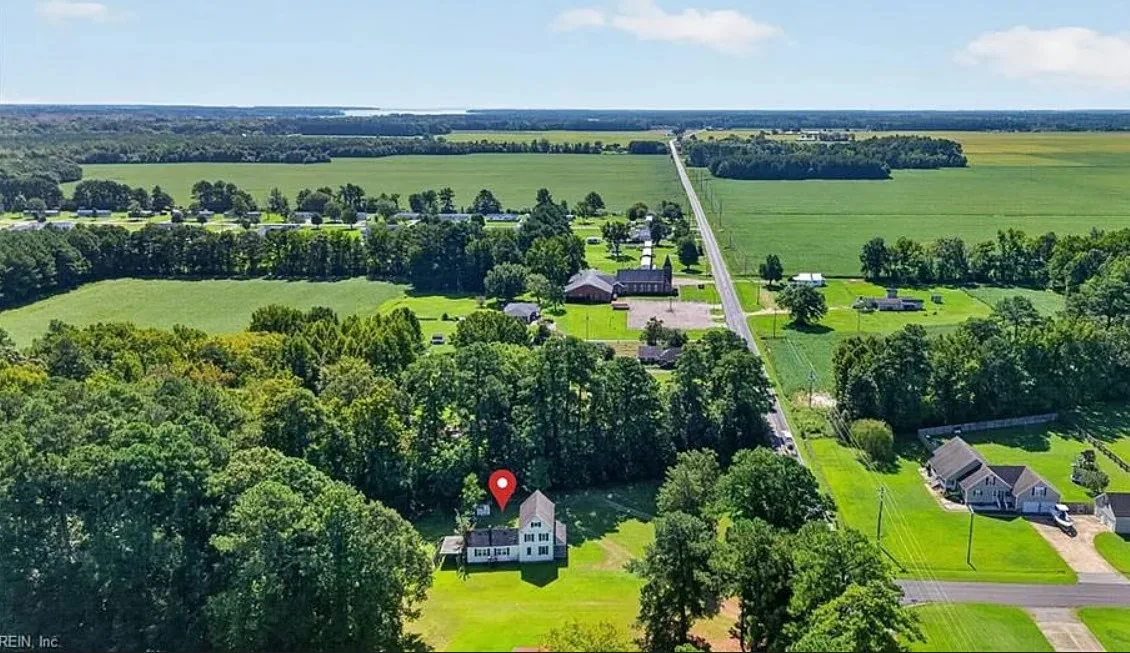
There is a certain kind of house that makes you slow down when you scroll past it. It is not flashy and it is not perfect, but it has a covered front porch, a covered side porch, a big yard and that old-house look that tells you it has been standing for nearly a hundred years. This is one of those houses. It was built in 1927, it sits on 1.89 acres just outside Hertford, North Carolina, and it is listed at $120,000.
The listing puts it simply: transform this property and make it your own. It needs work, and anyone looking at it should go in with open eyes. But it also has a few things going for it that a lot of older fixer-uppers do not, including public water, a heating and cooling system that is only about five years old, and a location where flood insurance is not required. In a coastal county like Perquimans, that last point matters more than most buyers realize.
The Basics
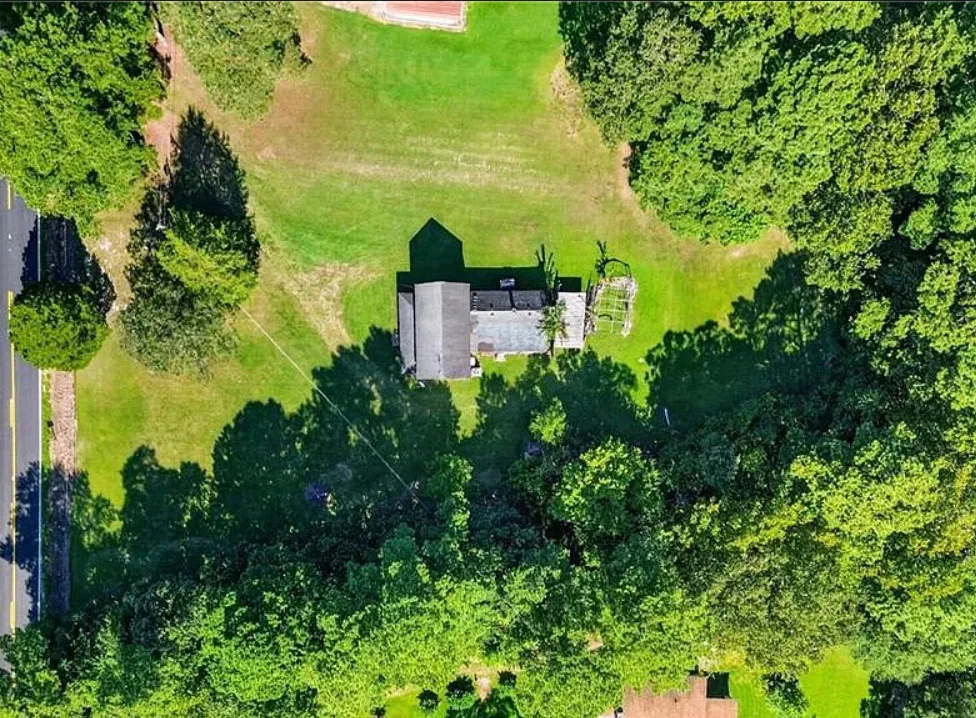
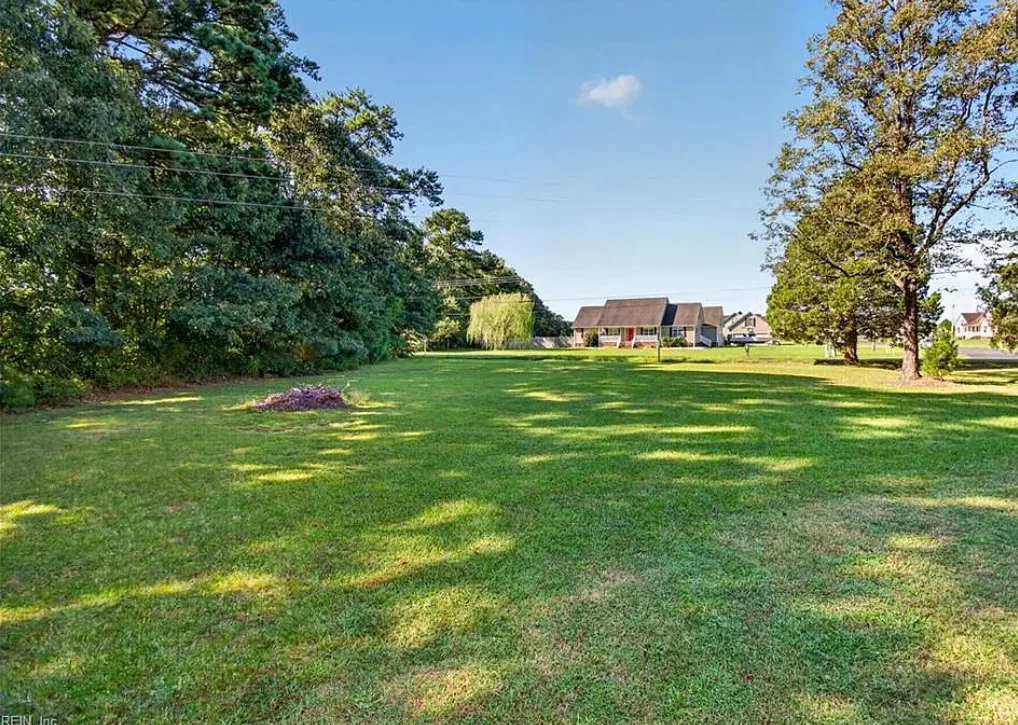
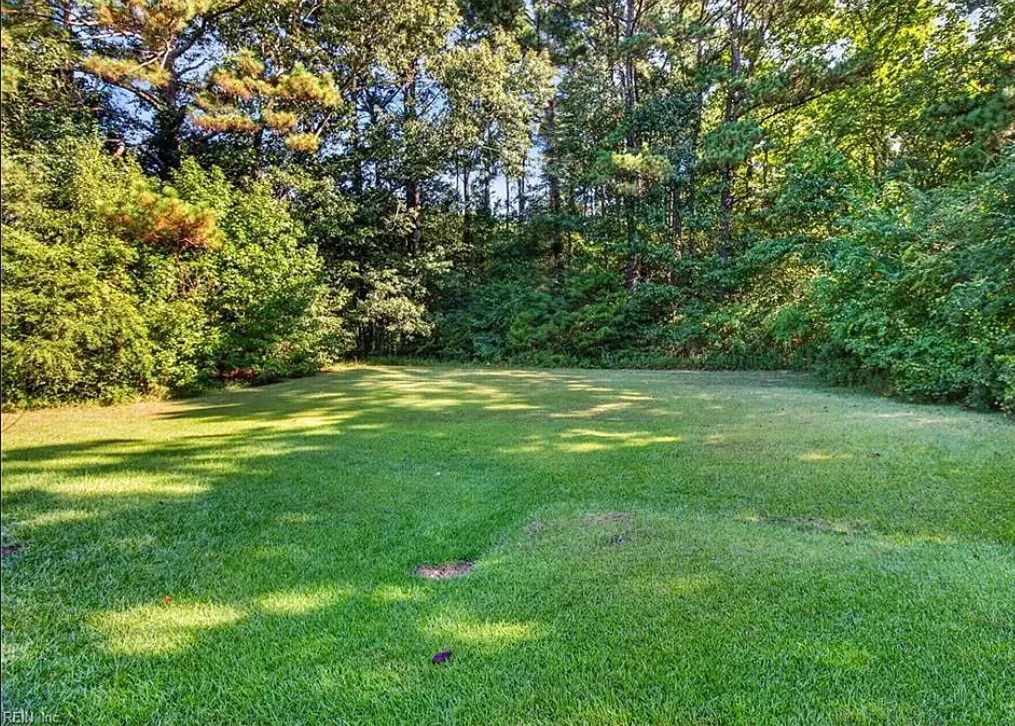
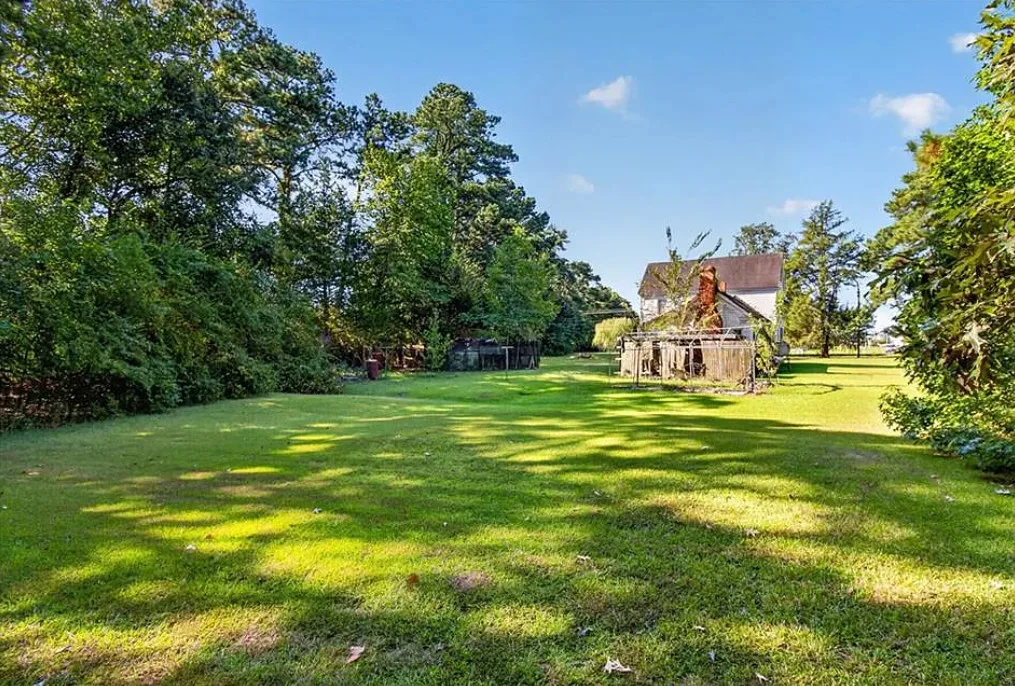
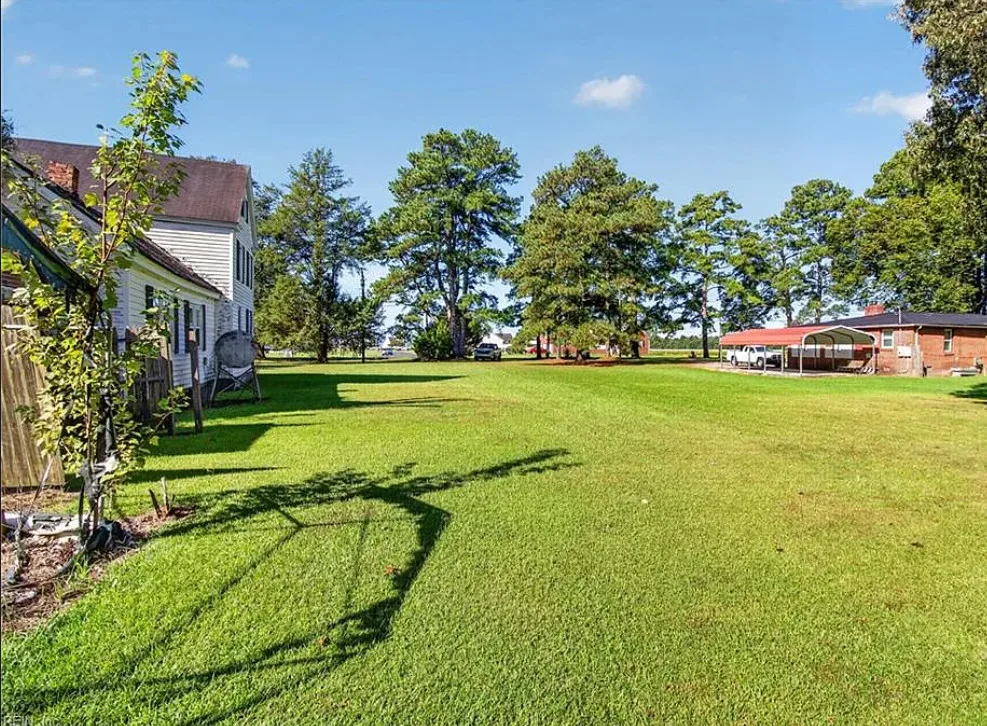
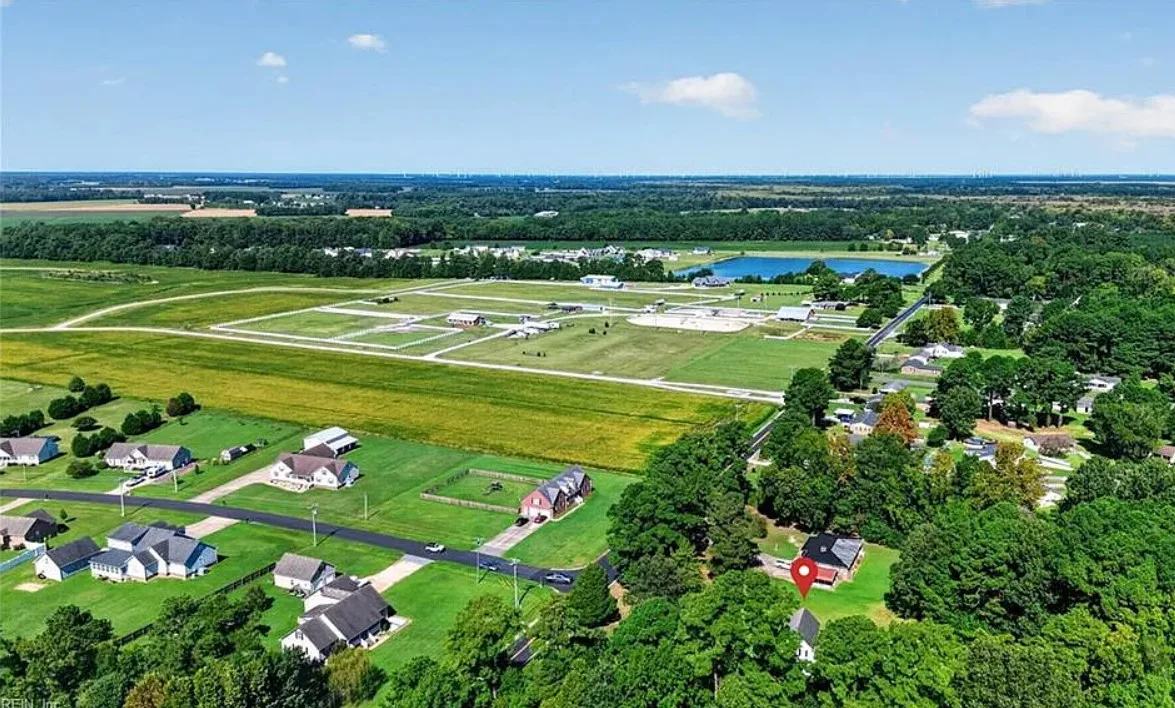
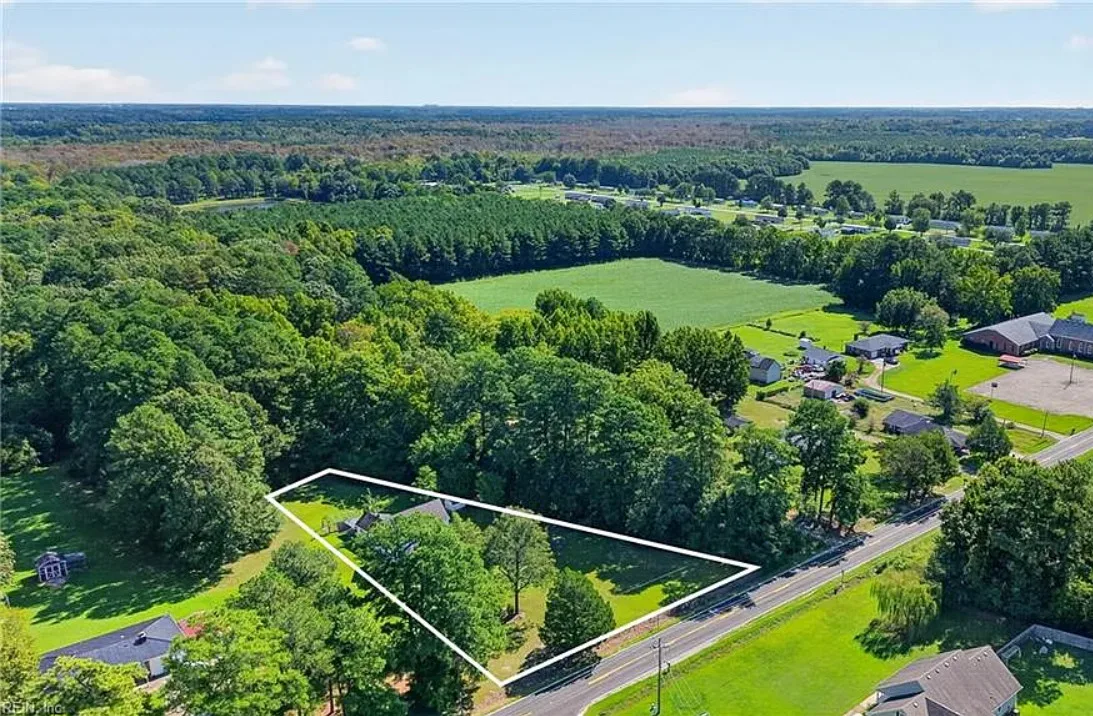
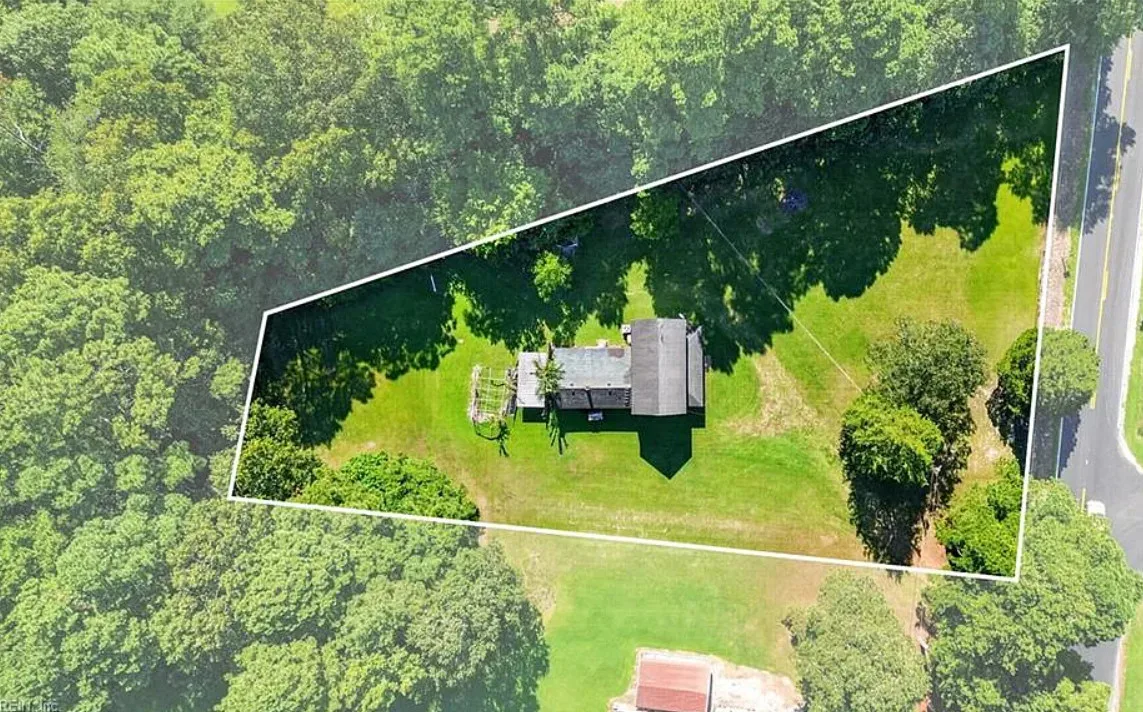
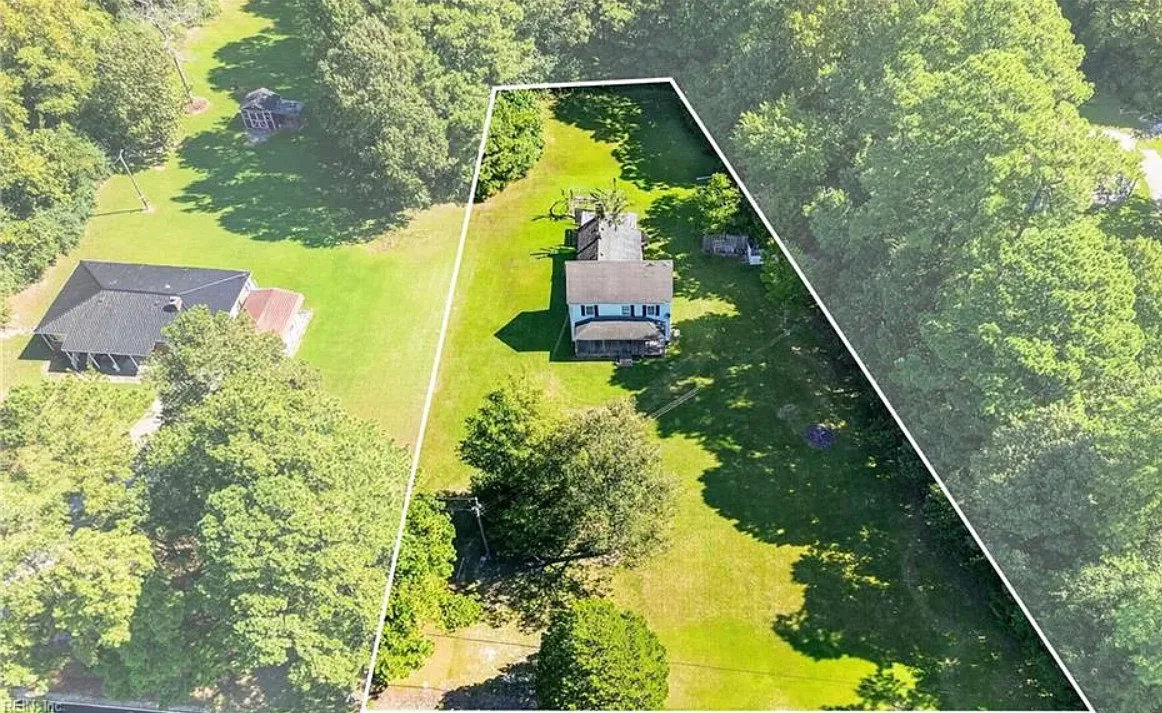
The home has three bedrooms and one bathroom, with 1,012 square feet of listed living space. That number does not include the upstairs, so the actual usable space is larger than the listing total suggests. The property is 1.89 acres, and part of that is a cleared yard while the rest includes some of the surrounding wooded area. There is a detached storage shed. Power comes from Dominion Energy and water from Perquimans County Water. The property is outside the city limits, and the listing states that no flood insurance is required.
Two Porches and a Lot of Character
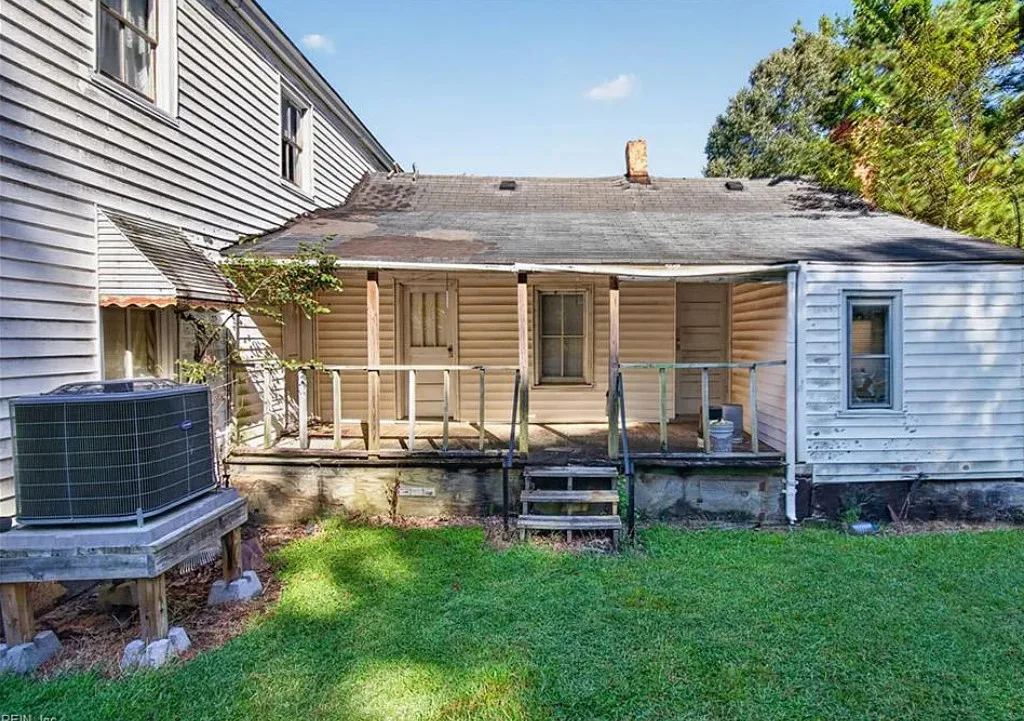
The covered front porch is the first thing you see, and it is the kind of porch that makes a small house feel welcoming. Pull up a couple of chairs, hang a swing and you have the best seat on the property. The covered side porch is a nice bonus. It gives you a second place to sit outside, a sheltered entry for bringing in groceries on a rainy day, or a spot to kick off muddy boots after working in the yard.
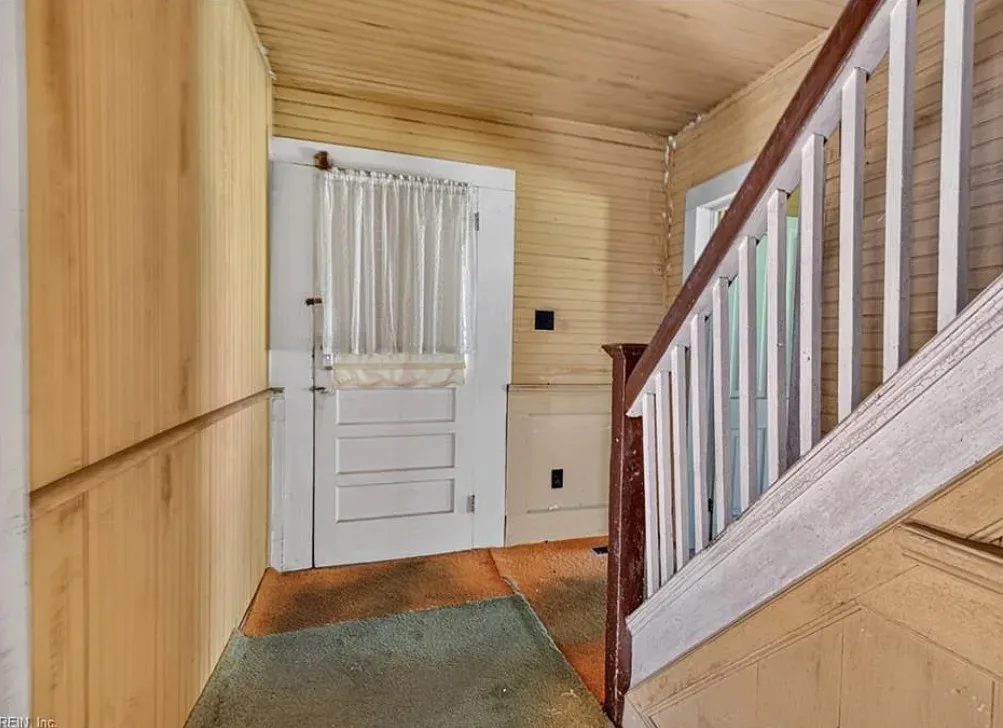
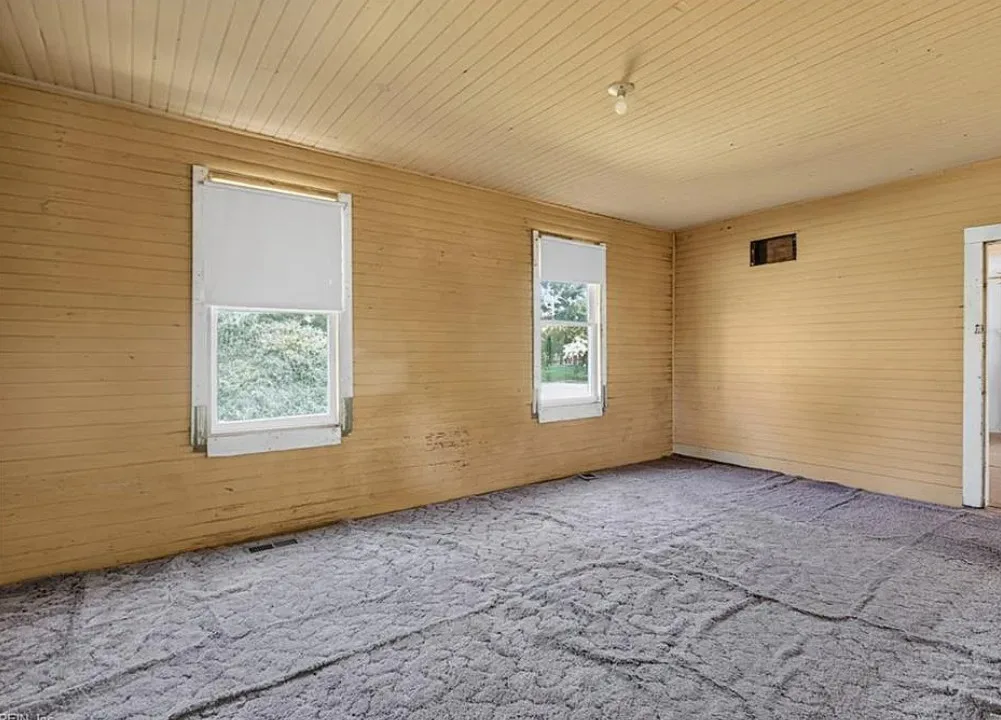
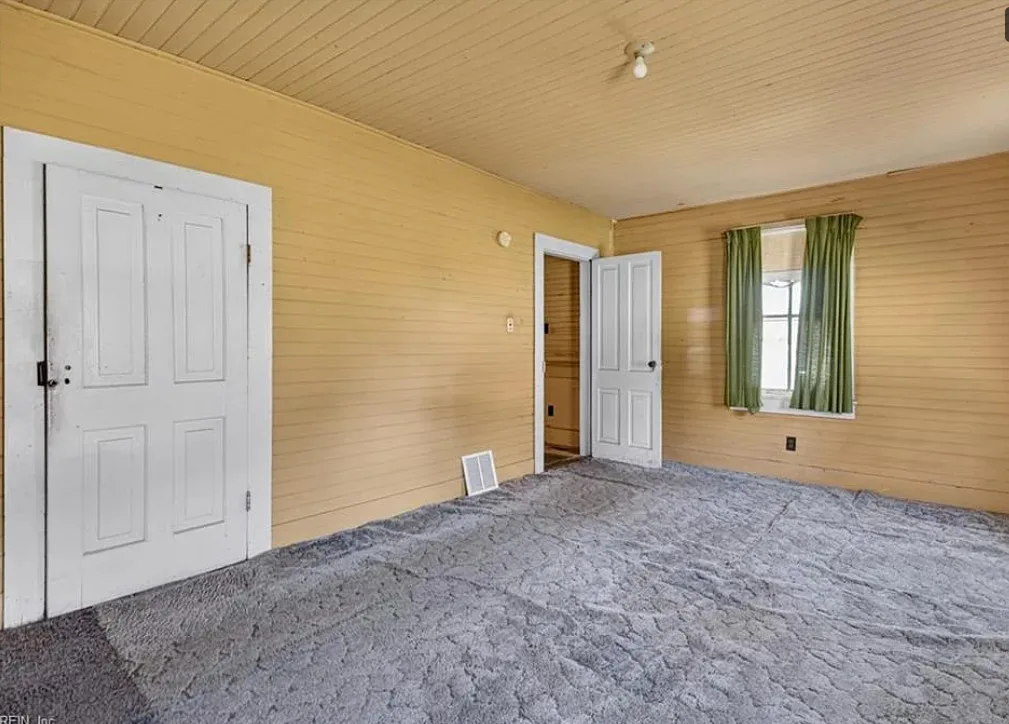
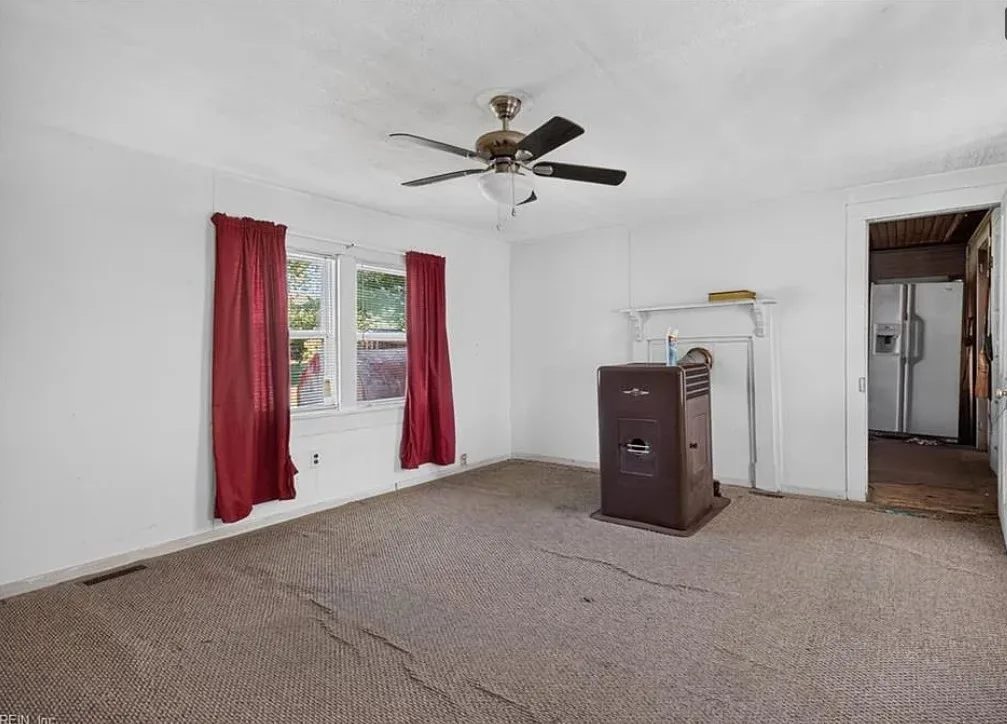
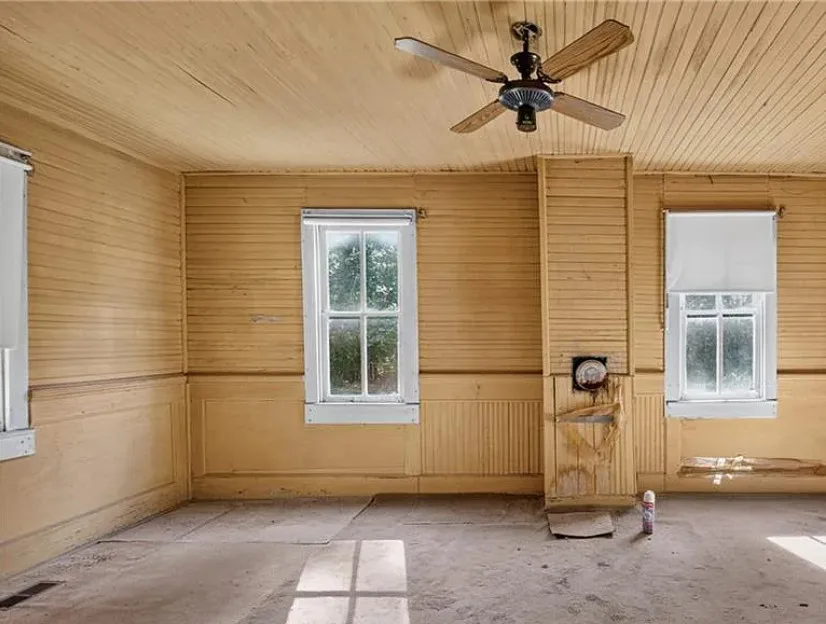
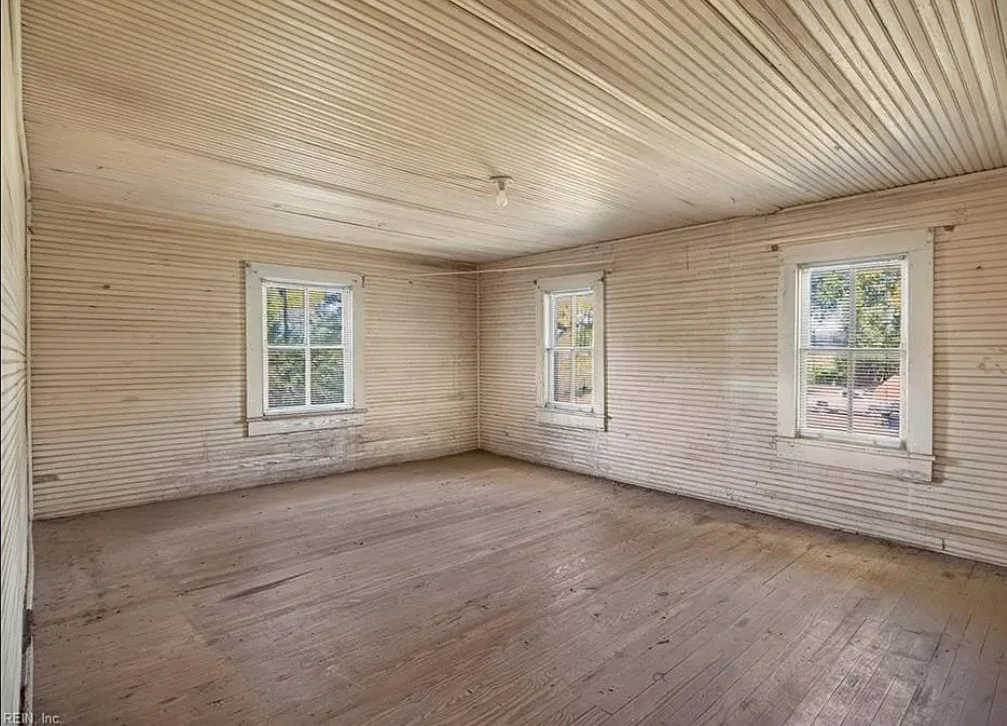
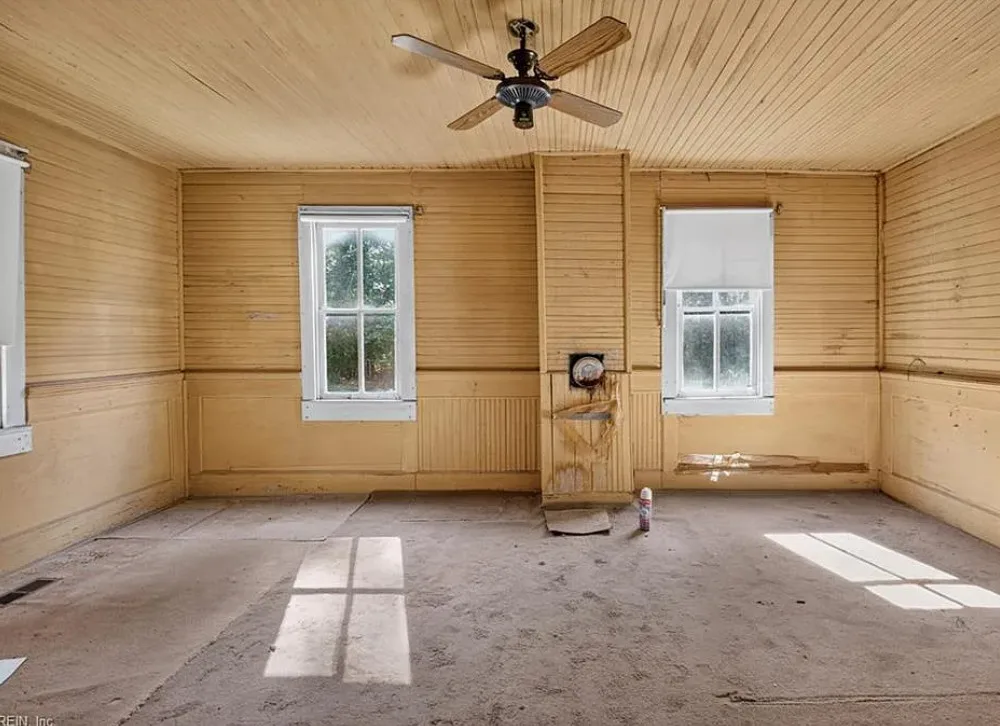
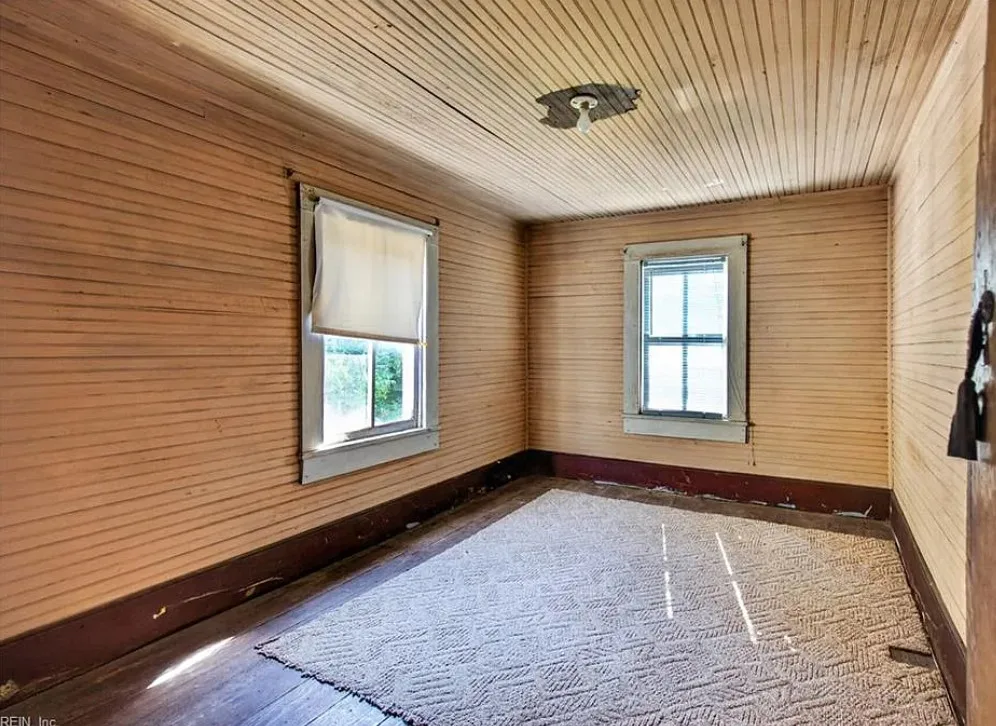
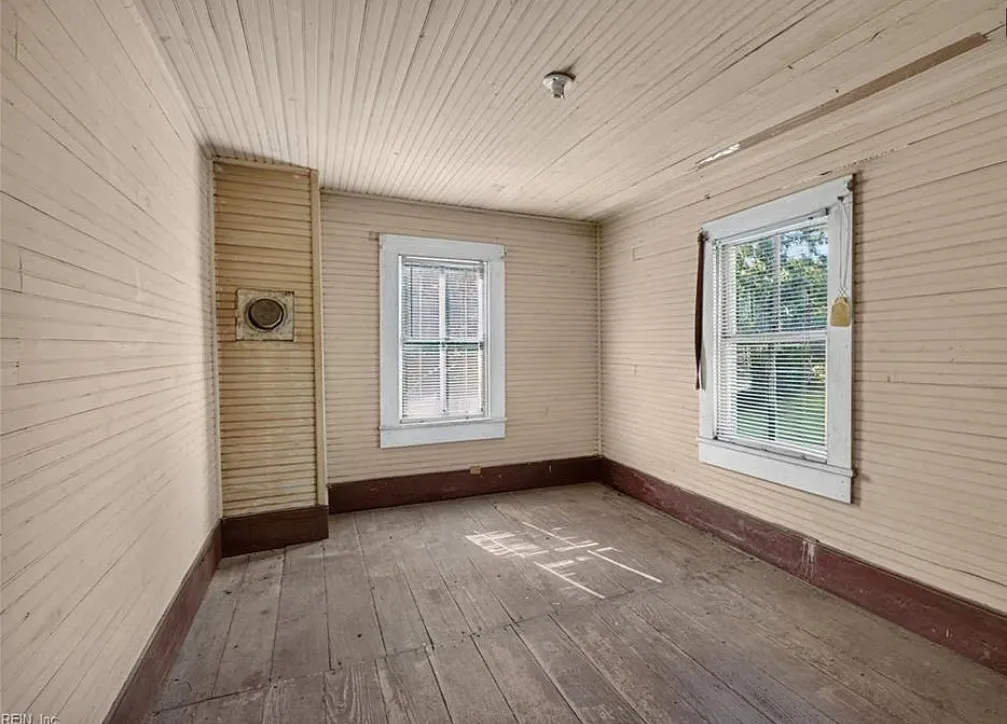
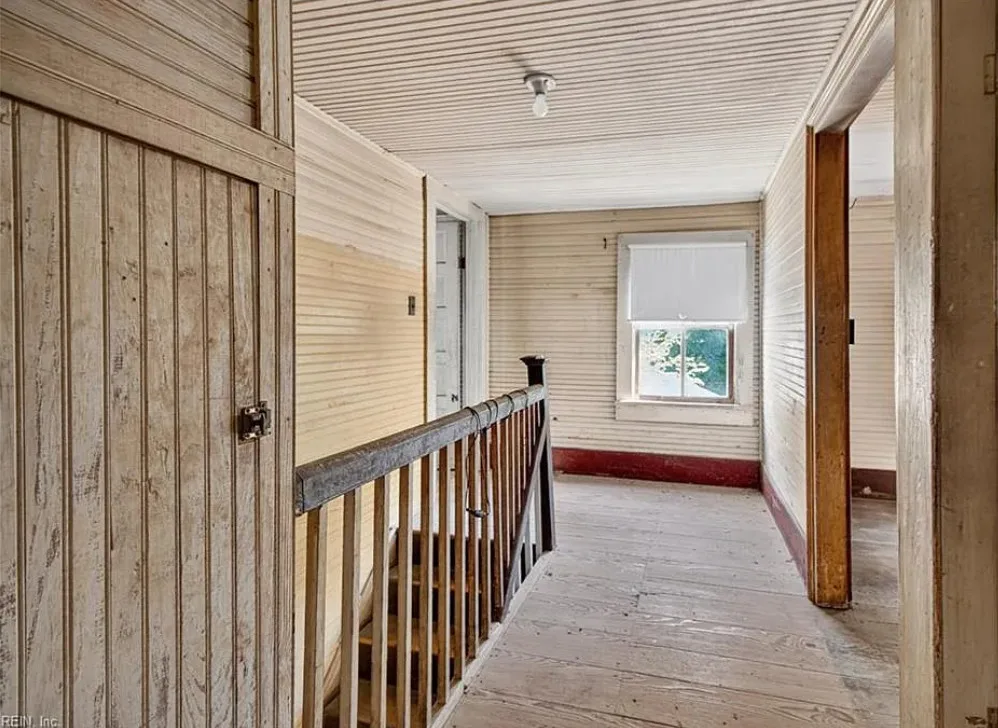
Inside, the house keeps some of the details that make homes from the 1920s so appealing. There is beadboard, the classic grooved paneling that shows up on walls and ceilings in older Southern homes, along with chair rails that add a touch of craftsmanship to the rooms. These are the kinds of features that renovators try to save, because they are part of what gives an old house its personality.
There is also a good chance of a nice surprise underfoot. Much of the house is carpeted now, but in a home built in 1927, it would not be unusual to find original hardwood floors hiding underneath. We cannot promise that, and a buyer should pull up a corner of the carpet or ask the seller before counting on it. But if the hardwood is there and in decent shape, refinishing it is one of the most affordable ways to transform an older home.
The Kitchen and the Layout
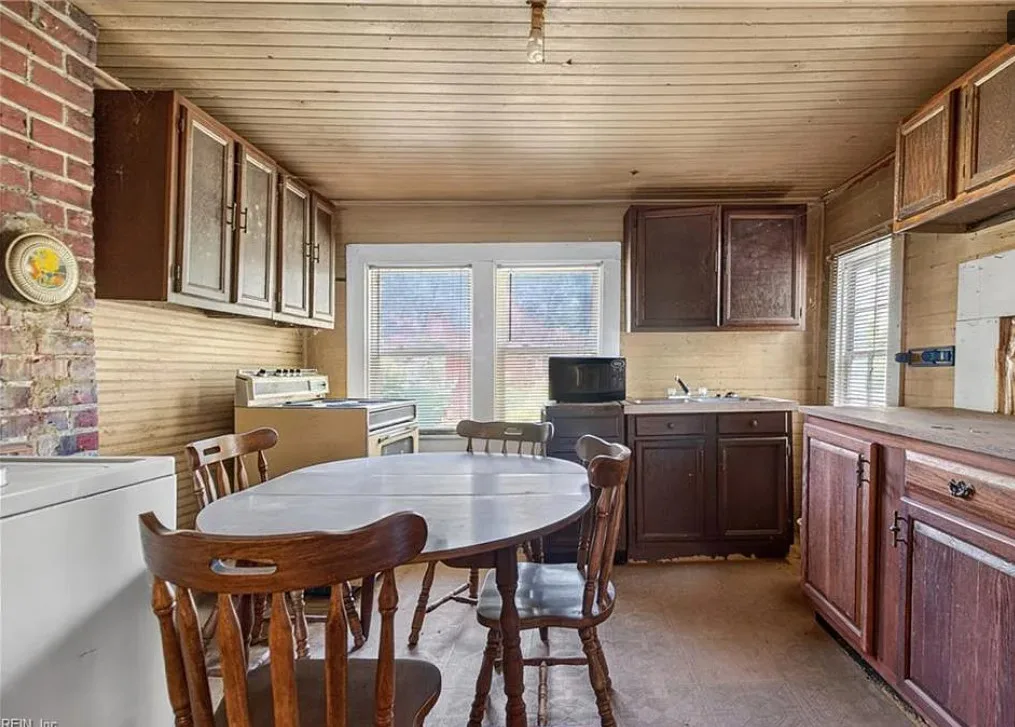
The kitchen is described as spacious, which is good news for a buyer planning updates. A large kitchen gives you room to add an island, more counter space, a breakfast table or a pantry, and it is easier to redesign than a small, cramped one.
With three bedrooms on 1,012 listed square feet, the house is compact, but the upstairs space that is not included in that total could change the picture. Depending on its condition and ceiling height, it might work as storage, a hobby room, a playroom or, after the right improvements and permits, additional living space. That is something to look at closely during a showing.
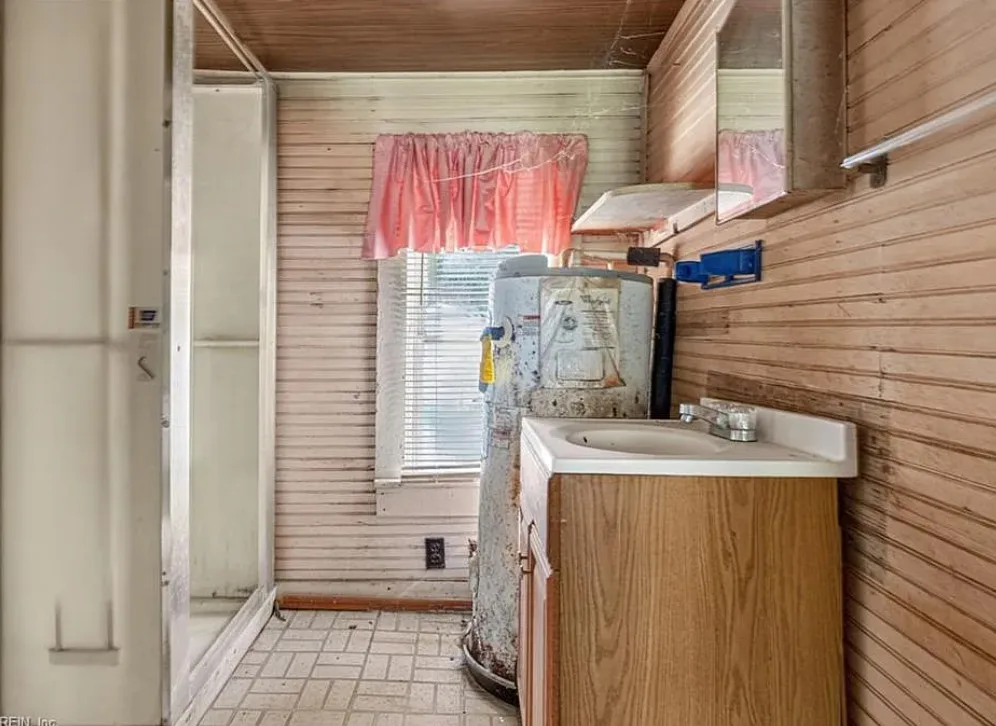
The single bathroom is the one layout item many buyers will want to address down the road. Adding a second bathroom or a half bath is a common upgrade in older homes, and it can make a noticeable difference in both day-to-day living and resale value.
Updates That Take Some Pressure Off
Every fixer-upper has a list of unknowns, but it helps to know what is already in decent shape. Here, the heating and cooling system is about five years old. In eastern North Carolina, where summers are long, hot and humid, air conditioning is not optional. A relatively new HVAC system can save a buyer several thousand dollars compared with a house that needs a full replacement.
The house is also on public water from Perquimans County rather than a private well. That means no well pump to maintain, no well water testing and no worries about the water running out in a dry summer. Power is supplied by Dominion Energy, which serves much of northeastern North Carolina.
No Flood Insurance Required
This deserves its own section. Perquimans County sits along the Albemarle Sound and is crossed by rivers and creeks, and large parts of the region fall inside flood zones. For homes in those zones with a federally backed mortgage, flood insurance is required, and it can add a significant amount to the yearly cost of owning a home.
According to the listing, this property does not require flood insurance. That can make monthly payments noticeably more affordable. Buyers should still confirm the flood zone designation on the FEMA flood map, and some choose to carry a lower-cost flood policy anyway for peace of mind, since flooding can happen outside mapped zones too.
Almost Two Acres of Country Living
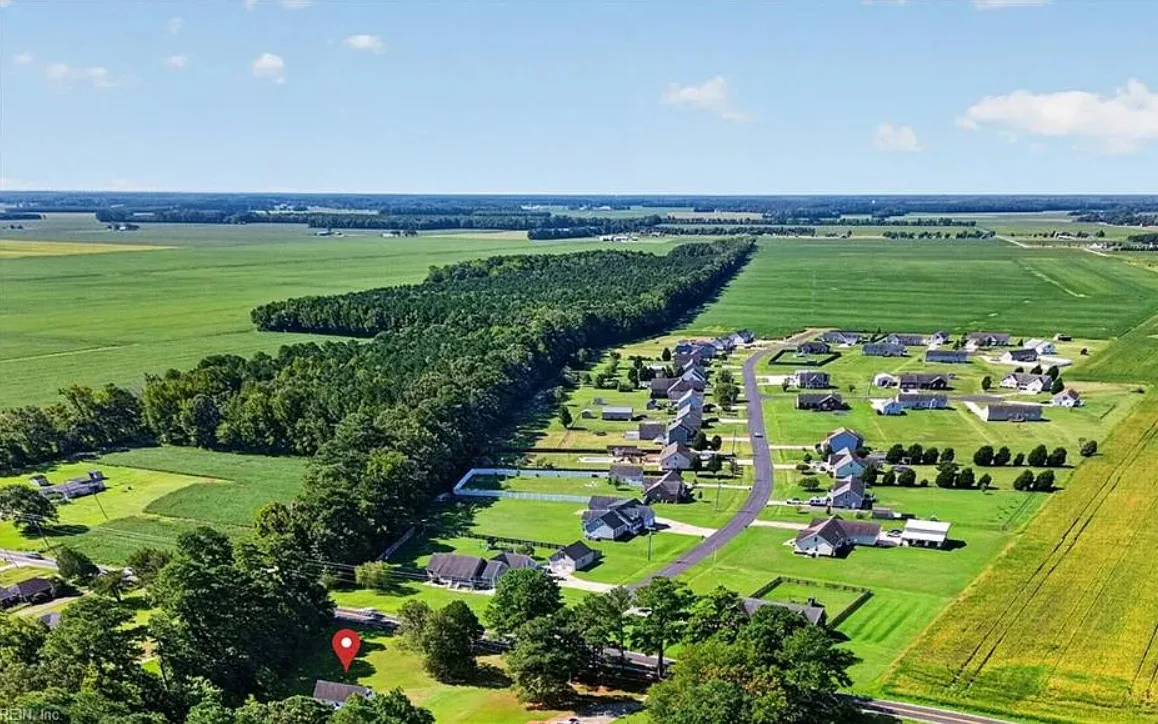
The land gives you options. Part of it is cleared yard and part of it is wooded, which gives you both open space and privacy. The cleared area has room for a vegetable garden, a play set, a few raised beds, fruit trees, or a flock of backyard chickens, depending on local rules. The wooded area creates a natural buffer and a bit of shade and wildlife.
The detached storage shed is a useful place for lawn equipment, garden tools, bikes and anything else you do not want cluttering the house. Being outside the city limits can also mean fewer restrictions and lower municipal taxes, although buyers should check county rules for anything they have in mind.
About Hertford and Perquimans County
Hertford is the county seat of Perquimans County, in the northeastern corner of North Carolina. It is a small, historic town set along the Perquimans River, known for its old homes, its quiet downtown and its well-known S-shaped bridge over the river. The town is also known as the hometown of baseball Hall of Famer Jim “Catfish” Hunter.
Life here moves at an easy pace, and the region is full of water. Boating, fishing, kayaking and crabbing are part of everyday life for many residents. Historic Edenton is a short drive away, Elizabeth City is nearby for shopping and services, and the Hampton Roads area of Virginia, including Norfolk and Chesapeake, is within driving distance for bigger city amenities and jobs. The beaches of the Outer Banks are also within reach for a day trip.
Many people are drawn to this part of North Carolina for the combination of low prices, open space, water and small-town living. If you are coming from a larger city, the difference in pace and cost can feel dramatic.
What a Renovation Might Involve
Any house built in 1927 that needs work should be looked at carefully. Here are the areas that commonly come up in homes of this age.
The electrical system may need updating, especially if there is old wiring still in the walls. An electrician can tell you whether the house needs a partial or full rewire and whether the service panel is adequate.
Plumbing in older homes may include outdated supply or drain lines, and the single bathroom may need updating along with the kitchen fixtures.
The foundation, crawl space and floor framing should be inspected, especially in a humid coastal climate where moisture can cause rot, mold and pest problems. Crawl space encapsulation is a common improvement in this part of the country.
Termites are a serious concern in eastern North Carolina, and a wood-destroying insect inspection should be part of any purchase.
The roof, windows and insulation are also worth checking, since they affect both comfort and energy bills. Once you have estimates, add a 15 to 20 percent contingency for the surprises that almost always turn up in an older home.
How Buyers Could Finance This Home
At $120,000, this property is within reach of many buyers, but a house that needs work can affect which loans are available. Here are some options to discuss with a lender.
USDA loan. Much of Perquimans County is rural, and properties outside city limits often fall within USDA eligible areas. USDA Rural Development loans can offer zero down payment for buyers who meet income limits, but the home must meet basic condition standards. Check the address on the USDA eligibility map.
FHA loan. FHA loans allow down payments as low as 3.5 percent with flexible credit requirements. The appraisal includes minimum property standards, so depending on condition, some repairs may need to happen before closing.
FHA 203k renovation loan. If the house needs more than cosmetic work, a 203k loan lets you finance the purchase and the renovation together in one mortgage. For a property at this price point, it can make a lot of sense.
Conventional and HomeStyle loans. A conventional loan may be more flexible on condition, especially with a larger down payment. The Fannie Mae HomeStyle renovation loan is another option for rolling improvements into the mortgage.
VA loan. Eligible veterans and service members may be able to buy with no down payment. Northeastern North Carolina is home to many military families, given its proximity to the bases in Hampton Roads and the Coast Guard presence in Elizabeth City.
Cash or local lenders. At this price, some buyers may be able to pay cash or use a small loan from a local bank or credit union, many of which are more comfortable with older rural homes than large national lenders.
Insurance Questions to Ask
Even without required flood insurance, homeowners insurance in coastal North Carolina deserves attention. Ask insurers about wind and hurricane coverage, including whether there is a separate hurricane or named storm deductible, which is common in this region. Ask how the age of the home, the wiring and the roof will affect your premium, and whether the shed is covered. If you plan to renovate before moving in, ask whether you need a vacant dwelling or builder’s risk policy during the work. And even though flood insurance is not required, get a quote anyway, since policies outside high-risk zones are often inexpensive.
Our Due Diligence Checklist
If we were buying this house, here is what we would do before closing.
- Hire an independent home inspector with experience in older homes.
- Get a wood-destroying insect inspection, which is important in eastern North Carolina.
- Ask to pull up a corner of the carpet to check for hardwood floors.
- Look closely at the upstairs space and ask why it is not included in the square footage.
- Have the HVAC system serviced and ask for its installation records.
- Check the roof age and condition.
- Have an electrician and a plumber look at the wiring and pipes.
- Inspect the crawl space for moisture and structural issues.
- Confirm how wastewater is handled and, if there is a septic system, have it inspected.
- Verify the flood zone on the FEMA flood map.
- Walk the property lines and review the survey, since part of the land is wooded.
- Check for lead paint and asbestos, both common in homes of this age.
- Get contractor estimates for the work you plan to do before finalizing your offer.
The Local Market
Northeastern North Carolina remains one of the more affordable areas on the East Coast, especially for buyers who want land and a bit of water nearby. Many homes in Perquimans County are priced well below the state average, and the area has been attracting retirees, remote workers and people from Virginia and the Northeast looking for a quieter life at a lower cost.
Ask your agent for recent sales of comparable older homes on acreage in and around Hertford, both renovated and unrenovated. Knowing what fixed-up homes sell for will help you decide how much you can reasonably spend on the purchase and the renovation.
Who This House Suits
This home could be a good fit for a first-time buyer who does not mind some sweat equity, a retiree looking for a quiet place near the water, a hands-on renovator, or a buyer who wants land and space without spending a fortune. It would also appeal to anyone who loves old homes and has been waiting for a project with a price that leaves room in the budget for improvements.
Our Take
This house has a lot of potential. A 1927 home with a covered front porch, a covered side porch, beadboard, chair rails, a spacious kitchen, possible hardwood under the carpet and upstairs space that is not even in the listed total. Add almost two acres, public water, a five-year-old HVAC system and no required flood insurance, and it is an interesting opportunity at $120,000. It will take work and a careful inspection, but for the right buyer, this could turn into a very comfortable country home in a charming corner of North Carolina.
From the Zillow listing:
Our website is designed for informational and entertainment purposes only. We are not a real estate brokerage or licensed contracting service. We operate solely as an independent blog, curating interesting houses, DIY guides, and practical home tips found across the internet. All decisions related to real estate transactions or home renovations should be made in consultation with licensed professionals. We do not guarantee the ongoing accuracy or availability of external property listings, as market statuses change rapidly. Please use our content at your own discretion.