Historic Davenport Mansion on the Mississippi River: A Buyer’s Guide to Restoration, Financing and Long-Term Value
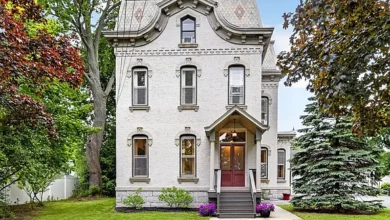
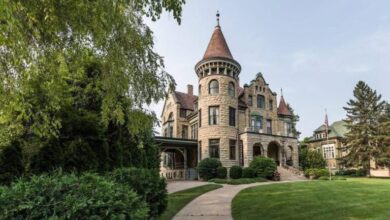
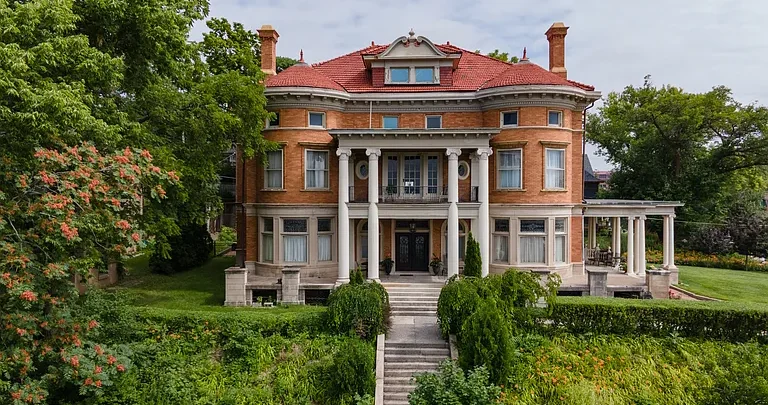
Every so often a house comes to market that is less a transaction than an inheritance. This historic Davenport residence is one of them. Grand architecture, elegant brickwork, a commanding position with views across the Mississippi River, and an interior that still carries its original ambition: a grand staircase, detailed murals, decorative stucco work and multiple fireplaces.
It also comes with unfinished spaces. That is the honest part of the story, and for the right buyer it is the best part. This is a rare opportunity to own and complete one of Davenport’s most remarkable architectural treasures, which means the property is priced and positioned as a project rather than as a finished product.
Below is a full walkthrough of the residence, followed by the guidance that matters most on a purchase like this: renovation financing, historic rehabilitation tax credits, flood insurance on the Mississippi, insuring a large historic masonry home, Iowa property taxes, and the due diligence sequence that separates a successful restoration from an expensive lesson.
Architecture That Cannot Be Replicated
The exterior brickwork alone tells you what era produced this house. Load-bearing masonry executed at this level required skilled bricklayers working with materials and methods that have largely disappeared from residential construction. Replicating it today would cost far more than most buyers would guess, and in many cases it simply could not be done at all because the craft tradition no longer exists at scale.
Inside, the grand staircase serves as the organizing gesture of the entire house, the element every visitor encounters first and remembers longest. Detailed murals represent commissioned artwork rather than decoration, and decorative stucco work adds relief and shadow that flat modern surfaces cannot achieve. Multiple fireplaces anchor rooms throughout and reflect an era when each principal space carried its own heat source.
Spacious living areas highlight the home’s impressive scale. Ceiling heights, room proportions and window sizes from this period create a sense of volume that contemporary construction rarely attempts. Large windows fill the interior with natural light, and an upper-level balcony provides a quiet vantage point over the city and the river landscape beyond.
The Unfinished Spaces: Understanding the Opportunity
Several unfinished spaces offer excellent potential for restoration, customization and future improvement. This is the defining characteristic of the purchase and it deserves direct treatment rather than optimistic language.
Unfinished space in a historic mansion means you are buying at a discount to completed value, with the difference representing work you will fund and manage. That can be an outstanding financial position or a difficult one, and the deciding factor is almost entirely the quality of your planning before you close.
The advantages are real. You control the finishes rather than inheriting someone else’s taste. You can phase the work to match your budget rather than paying a seller’s premium for completed renovation. You can sequence improvements to address systems first and cosmetics later, which is the correct order and one that flippers frequently reverse. And in a market where completed historic homes command significant premiums, the spread between purchase price plus renovation cost and finished market value is where your equity comes from.
The risks are equally real. Historic restoration routinely exceeds initial estimates, discovery of hidden conditions is normal rather than exceptional, skilled trades for period work are limited and scheduled far out, and carrying costs accumulate throughout a project that takes longer than planned. Build a contingency of at least twenty percent into any restoration budget for a house of this age and scale, and treat that as a floor rather than a cushion.
Davenport and the Quad Cities Market
Davenport sits on the Mississippi River in eastern Iowa, forming part of the Quad Cities alongside Bettendorf, Rock Island and Moline. The city carries substantial nineteenth and early twentieth century architectural stock, a legacy of the river commerce and industry that funded its most ambitious construction.
The market fundamentals differ meaningfully from coastal historic markets. Entry pricing is dramatically lower, which is precisely what makes ambitious restoration financially rational here. A comparable mansion in a coastal city would command a price that makes full restoration economically questionable. In Davenport, the acquisition cost leaves genuine room for a serious restoration budget.
Historic districts in the city have benefited from sustained preservation activity, and completed restorations in strong districts have shown solid appreciation. Confirm whether this specific property sits within a locally designated historic district or is individually listed on the National Register, because that status affects both available tax credits and any exterior modification requirements.
Financing a Historic Restoration Project
Standard mortgages are designed for move-in-ready homes. A property with unfinished spaces frequently fails conventional appraisal and condition standards, which means financing strategy matters more here than on almost any other purchase type.
FHA 203k Rehabilitation Loans
The FHA 203k program was built for exactly this scenario. It combines the purchase price and renovation costs into a single mortgage based on the projected after-improvement value rather than current condition. The Standard 203k accommodates structural work, system replacement and major renovation, with a HUD consultant overseeing the scope and draw schedule. The Limited 203k handles smaller cosmetic projects with a lower cost ceiling and less oversight.
The program requires owner occupancy, applies FHA loan limits by county, and involves more administrative process than a conventional loan. For a buyer intending to live in the home while restoring it, the tradeoff is usually well worth it, because few other products will finance a house in this condition at all.
Fannie Mae HomeStyle Renovation
The HomeStyle Renovation loan is the conventional equivalent and offers greater flexibility in several respects: higher loan limits in many cases, availability for second homes and some investment scenarios, no mortgage insurance requirement at twenty percent equity, and fewer restrictions on the type of improvements financed. Credit and down payment requirements are stricter than FHA, but for qualified buyers HomeStyle often produces better long-term economics.
Construction and Portfolio Loans
Local banks and credit unions in the Quad Cities may offer construction-to-permanent financing or portfolio loans held on their own books. Portfolio lenders are frequently the most practical option for a property that automated underwriting guidelines would reject outright, because a local underwriter can evaluate the house, the neighborhood and your restoration plan directly. Approach at least two local institutions alongside any national lender.
Home Equity and Staged Funding
If you already own property, a home equity loan or HELOC can fund acquisition costs or later restoration phases. HELOCs suit phased work particularly well because you draw only what you spend and pay interest only during the draw period. Model your payments against rate movement, since most home equity lines carry variable rates.
Historic Rehabilitation Tax Credits
This is where a restoration project’s economics can shift substantially, and it is the item buyers most often discover too late.
Iowa administers a state historic preservation tax credit program for qualifying rehabilitation of eligible historic properties, and the federal historic rehabilitation tax credit is available for certified rehabilitation of income-producing certified historic structures. Programs differ significantly in eligibility, application process, minimum investment thresholds and whether owner-occupied residential use qualifies.
Three points matter enormously. First, eligibility depends on the property’s designation status and the nature of its use, so verify both before assuming any credit applies. Second, applications generally must be submitted and approved before rehabilitation work begins, meaning that starting work early can permanently forfeit the credit. Third, qualifying work must meet the Secretary of the Interior’s Standards for Rehabilitation, which constrains materials and methods.
Because program rules and funding allocations change, contact the State Historic Preservation Office in Iowa directly during your due diligence period and consult a CPA experienced with historic credits. On a project of this scale, the credits can represent a meaningful share of your rehabilitation budget, and structuring the transaction correctly from the beginning is the only way to capture them.
Flood Insurance and Mississippi River Proximity
Any Davenport buyer must address flood exposure directly. Davenport’s relationship with the Mississippi is well documented, and the city has experienced significant flood events.
Order the FEMA flood map determination for the exact parcel during due diligence. Elevated bluff properties overlooking the river frequently sit well outside mapped hazard areas, while lower-lying parcels may not. Do not assume based on distance from the water, because elevation matters far more than proximity.
If any portion falls within a special flood hazard area, flood insurance becomes mandatory for federally backed financing. Premiums under current risk rating methodology depend on elevation, foundation type, distance to the water source and replacement cost. An elevation certificate prepared by a licensed surveyor frequently reduces the premium substantially and is worth commissioning even when not required. Coverage under the National Flood Insurance Program carries limits, so buyers of high-value properties should price excess flood coverage through private carriers.
Insuring a Large Historic Home
Insurance on a historic masonry mansion under restoration involves several distinct issues.
Vacant or under-renovation properties typically require a builder’s risk or vacant property policy rather than standard homeowners coverage. Standard policies contain vacancy clauses that suspend coverage after a defined period of non-occupancy, and discovering that after a loss is catastrophic. Arrange appropriate coverage before closing.
For the completed home, replacement cost on historic construction bears little relation to conventional building costs. Replicating decorative stucco, period murals, custom millwork and load-bearing masonry costs multiples of standard construction. Request adequate dwelling limits and ask carriers specifically about historic home programs or endorsements, which some specialty insurers offer for exactly this housing stock.
Carriers scrutinize older homes on roof age, electrical service and panel type, plumbing material and heating system age. Knowing these condition points before you apply lets you address them proactively. Add umbrella liability coverage and confirm water backup coverage given the basement.
Iowa Property Taxes
Iowa property taxes are assessed at the county level with rates set by overlapping taxing districts including county, city and school district. Scott County assessment practices and the state rollback percentage both affect the final bill, and the mechanics differ enough from other states that buyers relocating from elsewhere should review them carefully.
Request the current tax statement for the parcel. Ask the assessor how a sale affects assessed value and whether the property carries any exemption or abatement. Iowa offers a homestead credit for qualifying owner-occupied residences, and some jurisdictions offer tax abatement for improvements to historic or urban revitalization properties. Ask directly whether an improvement abatement program applies, because on a substantial restoration this can defer significant tax increases during the years when your renovation spending is heaviest.
Due Diligence Before You Close
The inspection scope on a historic mansion under restoration is broader than a standard purchase, and skimping here is the most expensive mistake available.
Engage a structural engineer, not only a home inspector, with specific attention to masonry condition, mortar deterioration, foundation settlement and any water infiltration through the brick envelope. Masonry repointing on a large historic home is a significant expense and needs to be quantified before you commit.
Order a full evaluation of mechanical systems: electrical service capacity and wiring type, plumbing supply and waste materials, and heating system condition. Have every fireplace and flue inspected at Level Two with camera scope. Add a sewer scope, a radon test and a roof evaluation including any flat sections, parapets and flashing details.
Pre-1978 construction requires lead paint disclosure and, on a house of this vintage, active lead management planning during renovation. Asbestos is likely present in insulation, flooring or mechanical materials, and abatement costs belong in your budget.
Confirm the property’s historic designation status, review any local historic district design guidelines that would govern exterior work, and verify zoning classification and permitted use. Order a current survey, review it for encroachments and purchase owner’s title insurance.
Finally, get written bids from qualified contractors before closing rather than after. A restoration budget built on estimates is a guess. A restoration budget built on bids from tradespeople who have walked the house is a plan.
Who Should Buy This House
This residence suits a buyer who understands what they are taking on and wants it anyway. Someone who values murals, stucco relief and a grand staircase enough to fund their preservation. Someone with the financial capacity to complete a phased restoration and the temperament to live through it. Someone who sees unfinished space as canvas rather than as burden.
It does not suit a buyer seeking immediate occupancy, predictable costs or a short holding period. Historic restoration is a multi-year commitment measured in patience as much as in capital.
For the right owner, the reward is substantial: a genuinely irreplaceable house with river views, in a market where the acquisition price leaves real room for restoration economics to work. The next steps are clear. Secure pre-approval for a renovation loan product, contact the Iowa State Historic Preservation Office about credit eligibility before any work is planned, obtain the flood determination and insurance quotes at the actual address, assemble contractor bids, and walk the house with a structural engineer. Opportunities to complete a landmark like this appear rarely, and they reward buyers who arrive prepared.


Watch Via Zillow