Circular Mountain Retreat With Stone Fireplace, Sauna and Rooftop Veranda: A Complete Buyer’s Guide
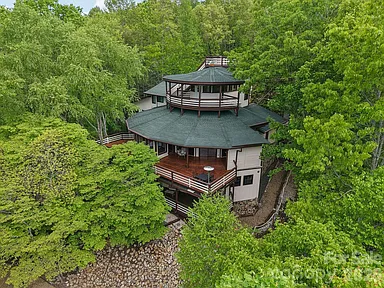
Every so often a property comes along that refuses to look like anything else on the market. This mountain retreat is one of them. Wrapped in serene forest, framed by long ridge views and built around a dramatic central stone fireplace, the main house uses a striking circular design that turns an ordinary floor plan into something closer to a piece of architecture. For buyers searching for a private estate, a family compound or a high-performing vacation rental, this is the kind of listing that deserves a careful, informed look before making an offer.
Below is a full walkthrough of the property, followed by the practical side most buyers underestimate: mortgage options for a second home, homeowners insurance in wooded mountain terrain, property taxes, short-term rental income potential, and the due diligence checklist that protects you from expensive surprises after closing.
A Circular Design Built Around a Stone Fireplace
The heart of the home is a massive stone fireplace positioned at the center of the structure, with living space radiating outward in a circle. The effect is immediate. There is no long hallway, no wasted corridor, no dead corner. Every room orients back toward the same warm anchor, and the flow between spaces feels continuous rather than chopped into boxes.
Round and octagonal homes are rare for a reason. They are more expensive to frame, harder to furnish and demand custom millwork. But they also deliver something conventional construction cannot: uninterrupted sightlines, superior heat distribution from a central hearth, and exceptional structural performance in high wind. In mountain and forest settings where storms roll through the ridges, that circular geometry is a genuine functional advantage, not just a design statement.
For resale, distinctiveness cuts both ways. A circular home narrows the buyer pool, but it also removes the property from direct comparison with every other cabin in the county. Unique architecture in a scenic location tends to hold value well and photographs beautifully, which matters enormously if short-term rental income is part of your plan.
Light, Views and Interior Warmth
Large windows wrap the living areas, pulling abundant natural light deep into the home and putting mountain and forest views on display from nearly every angle. In winter, that southern and western glazing does real work, passively warming the interior during daylight hours and reducing heating load. In summer, the surrounding tree canopy provides natural shading.
Interior finishes lean warm and tactile: natural wood tones, comfortable gathering spaces, and a scale that feels generous without being cavernous. The great room comfortably absorbs a large family or a group of guests, while smaller nooks around the perimeter give people places to read, work or simply watch weather move across the ridgeline.
One practical note for buyers: homes with extensive glazing benefit substantially from upgraded window packages. If the existing windows are single-pane or aging double-pane units, budget for replacement. Energy-efficient windows in a mountain climate typically pay for themselves through reduced heating costs, and many utility providers and state programs offer rebates or tax credits for qualifying upgrades.
Covered Porches and Outdoor Living
Spacious covered porches wrap the exterior, extending the usable footprint of the home well beyond its walls. In a property like this, the porch is not decoration. It is the room people actually use. Morning coffee in mountain air, afternoon shade during summer heat, and a dry place to sit through a rainstorm without going inside.
Covered porches also protect the structure itself, shielding siding, window frames and door thresholds from direct weather exposure. That reduces long-term maintenance costs on a home that sits in a forested, high-moisture environment.
Sauna, Hot Tub, Rooftop Veranda and Entertainment Space
This is where the property crosses from mountain home into resort-style estate. A sauna, a hot tub, a rooftop veranda and a dedicated entertainment space transform the retreat into a destination. Guests do not need to leave to have a full experience, which is exactly the profile that commands premium nightly rates on vacation rental platforms.
The rooftop veranda in particular is a signature amenity. Elevated above the tree line, it offers panoramic exposure to sunrise, sunset and night sky. In rural mountain areas with minimal light pollution, stargazing alone becomes a legitimate marketing feature.
Buyers should account for the maintenance side of luxury amenities. Hot tubs require chemical management, filter replacement and eventual heater or pump service. Saunas need periodic wood treatment and heating element inspection. Rooftop decking requires waterproof membrane inspection every few years. None of this is difficult, but it belongs in your annual operating budget rather than as a surprise expense in year two.
Additional Living Areas and a Separate Guest Space
Beyond the main residence, additional living areas provide privacy and flexibility for family members, extended visitors or overnight guests. A separate guest space adds another layer entirely, functioning as an in-law suite, a private office, a caretaker unit or an independent rental.
Multigenerational households increasingly search specifically for this configuration. Adult children, aging parents and rotating visitors all benefit from separate entrances and independent living quarters. The same layout that serves a family compound also serves an investor, and that dual-purpose flexibility is a meaningful part of the property’s value.
Financing a Mountain Retreat: What Buyers Need to Know
Financing a second home or a unique rural property is not the same as financing a suburban primary residence. Understanding the differences before you shop for a mortgage saves both money and time.
Second Home Versus Investment Property
Lenders classify properties into three buckets, and the classification directly controls your rate. A primary residence carries the lowest mortgage rates and the smallest down payment requirements. A second home, meaning a property you occupy part of the year and do not rent out full-time, typically requires ten to twenty percent down and carries a modest rate premium. An investment property, meaning one held primarily for rental income, generally requires twenty to twenty-five percent down and carries the highest rate of the three.
If you intend to place the guest space on a short-term rental platform, discuss it honestly with your loan officer up front. Misrepresenting occupancy intent on a mortgage application is mortgage fraud, and the paperwork trail from rental listings makes it easy to discover.
Jumbo Loans and Conforming Limits
Estate properties with multiple structures frequently exceed conforming loan limits, which pushes the transaction into jumbo territory. Jumbo loans carry stricter underwriting: higher credit score thresholds, lower debt-to-income ratios, larger cash reserve requirements and more documentation. Rates on jumbo products are sometimes competitive with conforming loans and sometimes higher depending on market conditions, so it is worth comparing offers from at least three lenders, including a portfolio lender or regional bank that keeps loans in-house.
Appraisal Challenges on Unique Homes
A circular home on acreage with multiple outbuildings is genuinely difficult to appraise, because there are few comparable sales. Low appraisals are common on distinctive rural properties and can derail financing. Work with a lender experienced in rural and unique-property lending, and consider requesting an appraiser familiar with the local market rather than one dispatched from a distant metro area.
Home Equity Options and Renovation Financing
If you already own property, a home equity loan or a HELOC on your primary residence can fund the down payment or cover post-purchase improvements. HELOCs offer flexible draw periods and interest-only payments during the draw phase, which suits phased renovation work. For buyers planning significant upgrades at purchase, a renovation loan rolls improvement costs into the mortgage rather than forcing separate financing at higher consumer rates.
Homeowners Insurance in Mountain and Forest Terrain
Insurance is the single most underestimated cost in wooded mountain property ownership, and it deserves attention before you go under contract, not after.
Wildfire risk scoring now drives premiums across most western and many eastern mountain markets. Carriers evaluate defensible space, roof material, vegetation density, road access width and distance to the nearest fire station. Some standard carriers decline these properties entirely, pushing buyers into surplus lines or state-backed FAIR plan coverage at significantly higher cost.
Request an insurance quote during your due diligence period, using the actual address. A quote based on a general area estimate is worthless. Ask specifically about dwelling replacement cost rather than market value, because rebuilding a custom circular home with a central stone fireplace costs far more per square foot than conventional construction.
Additional coverage worth pricing: separate structures coverage for the guest space and outbuildings, an umbrella liability policy given the hot tub and sauna, and short-term rental endorsement or a dedicated vacation rental policy if you plan to host guests. A standard homeowners policy typically excludes commercial rental activity, leaving you uninsured at exactly the moment you need coverage most.
Property Taxes and Ongoing Ownership Costs
Verify the current tax assessment and ask the county whether a reassessment triggers at sale. Many jurisdictions reset assessed value to the purchase price, which can substantially increase the tax bill above what the seller currently pays. In some states, agricultural, timber or conservation classifications reduce the assessment, but those classifications may not transfer automatically to a new owner.
Budget realistically for the full picture: property taxes, insurance, utilities, propane or heating oil delivery, well and septic maintenance, snow removal, driveway grading, tree management and amenity servicing. Rural ownership carries higher maintenance overhead than suburban ownership, and a property with this many features carries more than most.
Short-Term Rental Income Potential
A separate guest space with resort-style amenities in a scenic mountain setting near hiking, lake activities and outdoor recreation is close to an ideal vacation rental profile. Before counting on that income, confirm three things in writing: county and municipal short-term rental ordinances, any homeowners association restrictions, and required permits or lodging tax registrations. Regulations in mountain resort areas have tightened considerably, and some jurisdictions cap permits or prohibit new rentals outright.
If rentals are permitted, speak with a local property manager about realistic occupancy rates and average daily rates for comparable listings. Model conservatively, assume shoulder-season vacancy and include management fees, cleaning, platform commissions, restocking and higher wear-related maintenance.
Due Diligence Checklist Before You Close
Order a full home inspection plus specialty inspections appropriate to rural construction: septic system inspection and pumping, well flow and water quality testing, roof and rooftop deck membrane evaluation, chimney and fireplace inspection, and a structural review of the circular framing by someone experienced with non-conventional construction.
Confirm legal access. Verify that the driveway and any shared road are covered by a recorded easement with a defined maintenance agreement. Review the survey for encroachments and boundary discrepancies. Purchase owner’s title insurance, and ask the title company specifically about mineral rights, timber rights and any conservation easements recorded against the parcel.
Finally, check internet availability. Remote work capability materially affects both your enjoyment and your rental marketability, and satellite service quality varies widely by terrain.
Is This the Right Property for You?
This retreat suits three buyers particularly well. The family seeking a compound where multiple generations can gather without living on top of each other. The buyer who wants a genuine private sanctuary with resort amenities and forest privacy. And the investor who recognizes that distinctive architecture plus a full amenity package plus proximity to hiking, lakes and scenic attractions equals a listing that stands out in a crowded rental market.
What it does not suit is a buyer looking for low maintenance and easy resale liquidity. Unique properties reward owners who love them and frustrate owners who treat them as commodities.
If the circular design, the central stone fireplace and the rooftop veranda under an unpolluted mountain sky sound like the life you have been picturing, the next step is straightforward: get pre-qualified, get an insurance quote at the actual address, and schedule a walkthrough. Properties like this rarely stay on the market long once the right buyer sees the photos.



Watch Via Zillow