Houses
Character-Filled 1950 Home in Lumberton, North Carolina: Sunroom, Live Edge Siding and a Complete Buyer’s Guide

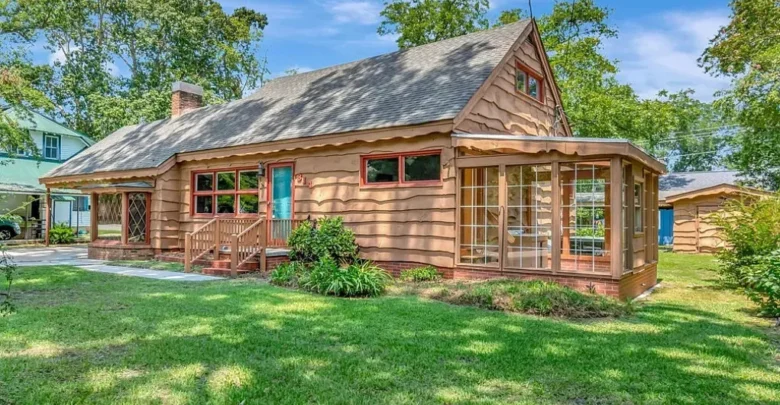
If cookie cutter is not your style, this one deserves a look. Built in 1950 and set in Lumberton, North Carolina, this four bedroom, two bath home spans approximately 2,005 square feet and carries the kind of personality that new construction cannot manufacture at any price. Wavy edge white pine siding wraps the exterior. Inside, warm wood, knotty pine, crown moulding, original baseboards and vintage kitchen cabinets give the home a cozy, lodge inspired feel that has become genuinely rare in the market.
The spacious den is anchored by a striking brick fireplace surround, creating a natural gathering place. The bright kitchen opens to an eat-in area built for everyday living. And the standout feature, the enclosed sunroom, offers a peaceful space for morning coffee, an afternoon book or simply watching the backyard through the seasons. One bedroom even includes access to its own greenhouse, ideal for gardening, hobbies or a light filled flex space.
Outside there is covered parking under a carport, an enclosed back porch, a detached wired building with genuine possibility, a generous yard, and a patio with a fire pit area. Listed at $209,900, it sits at a price point where financing options remain broad and where real value is still achievable.
Below is a full walkthrough, followed by the guidance Lumberton buyers need most: financing options including USDA and VA, the flood insurance question that no Robeson County buyer should skip, homeowners insurance on a 1950 home, North Carolina property taxes, and a due diligence checklist built for a house of this era.
Live Edge Siding and Exterior Character
Wavy edge white pine siding, sometimes called live edge or shiplap wane siding, is the first thing you notice. It was a regional building tradition in the Carolinas, using boards milled with the natural contour of the log left intact along one edge. The result is a rippling, organic shadow line across the facade that flat modern siding cannot reproduce.
This is a maintenance-aware material rather than a maintenance-free one. Wood siding in the humid coastal plain needs periodic sealing or staining, and buyers should budget for that on a regular cycle. In exchange you get an exterior that looks like nothing else on the street and that photographs beautifully, which matters for both daily enjoyment and eventual resale.
During inspection, have the siding evaluated for rot at ground contact points, around window and door trim, and at any spot where gutters have historically overflowed. Wood siding in good condition can last decades. Wood siding with unaddressed water intrusion deteriorates quickly, and knowing which situation you are buying is essential.
Interior Warmth: Knotty Pine, Wood Floors and Vintage Details
The interior carries a full set of period details that most 1950s homes lost to decades of remodeling. Wood floors, original baseboards, crown moulding, knotty pine paneling and vintage kitchen cabinets all survive here.
Knotty pine deserves specific mention because it has swung fully back into favor. For years it was painted over or torn out. Today buyers actively search for it, and the warm, enveloping quality of a pine paneled room is exactly what the current design cycle values. It also happens to be irreplaceable in practical terms, since matching original pine paneling in a renovation is expensive and rarely convincing.
Original hardwood floors are similarly valuable. Mid century oak flooring was typically installed at a thickness that permits multiple refinishings across a lifetime. If the existing finish is worn, refinishing costs a fraction of replacement and delivers a result no engineered product matches.
Vintage kitchen cabinets present a genuine choice. Original mid century cabinetry, particularly steel or solid wood units in sound condition, has become collectible. Refinishing and rehardwaring existing cabinets typically costs far less than replacement while preserving character that a stock kitchen erases entirely. Evaluate the boxes for structural soundness before deciding, because sound boxes make restoration the obvious call.
The Brick Fireplace and the Den
A brick fireplace surround anchors the spacious den, and in a home built for family life in 1950 that room was designed as the center of the household. It still works that way.
Order a Level Two chimney inspection with camera scope during due diligence. On a home of this age, the flue liner condition, damper function and masonry integrity all need verification, and insurance carriers frequently ask about solid fuel appliances during underwriting. A documented recent inspection helps on both fronts.
Sunroom, Enclosed Porch and Greenhouse
The enclosed sunroom is the feature buyers will remember. In eastern North Carolina, where humidity and insects make open outdoor space genuinely difficult through summer, an enclosed and conditioned sunroom converts the best views in the house into usable living area for twelve months rather than four.
The enclosed back porch adds another layer of transitional space, functioning as a mudroom, a laundry area, a plant room or simply a place to leave muddy boots.
The greenhouse accessed from one bedroom is unusual and worth understanding before you tour. It creates an immediate use case for gardeners and a flexible option for everyone else: a studio, a hobby room, a home office bathed in natural light. Check the glazing condition, the ventilation and whether it is heated, since an unheated greenhouse adjoining a conditioned bedroom can create a thermal and moisture bridge that needs attention.
Detached Wired Building, Carport and Yard
The detached storage building comes wired, which changes it from a shed into an asset. Wired outbuildings support a workshop, a home gym, a studio, a hobby space or storage for tools and equipment that would otherwise crowd the house.
North Carolina has expanded accessory dwelling flexibility in recent years, and if converting the building to a living or income space interests you, contact the City of Lumberton planning and inspections department directly. Ask about zoning classification for the parcel, setback requirements, whether an accessory dwelling is permitted, and what would be required for the structure to meet residential code. Answers vary by zoning district, so verify for this specific address rather than relying on general information.
The carport provides covered parking, which matters more in a humid climate with intense summer sun than northern buyers expect. The generous yard with patio and fire pit area completes the outdoor picture, giving genuine room for gardening, recreation and entertaining.
Financing at $209,900: Your Options Are Broad
This price point sits comfortably within conforming loan limits, which keeps every major financing program available. That is a real advantage over higher priced markets where jumbo underwriting narrows the field.
USDA Rural Development Loans
Robeson County contains substantial USDA eligible territory, and USDA loans offer zero down payment with no monthly mortgage insurance in the conventional sense, replaced by a lower guarantee fee. Income limits apply based on household size and county, and the property must fall within a designated eligible area.
Eligibility maps are updated periodically, so check the current map against this exact address rather than assuming based on the general area. If both the property and your income qualify, USDA is frequently the strongest available option for buyers without a large down payment.
VA Loans
North Carolina has a significant military and veteran population, with Fort Bragg within reasonable distance. VA financing offers zero down payment for eligible service members, veterans and qualifying surviving spouses, with no monthly mortgage insurance and competitive rates. For an eligible buyer this is almost always the best product available. VA appraisals apply minimum property requirements, so condition items on an older home should be addressed before appraisal where possible.
FHA and FHA 203k
FHA loans accommodate lower credit scores with down payments around three and a half percent. If you plan updates to the kitchen, baths or systems, the FHA 203k rehabilitation loan folds renovation costs into the purchase mortgage based on after-improvement value. For a 1950 home where you want to modernize systems while preserving period character, this is an efficient structure that avoids financing improvements at consumer credit rates later.
Conventional and First-Time Buyer Assistance
Conventional financing with three to five percent down serves buyers with solid credit, and private mortgage insurance falls off at twenty percent equity, which FHA mortgage insurance generally does not. The North Carolina Housing Finance Agency also administers down payment assistance and first-time buyer programs worth reviewing, including options that pair with conventional, FHA, VA and USDA loans.
Home Equity Options After Purchase
Once you own, a home equity loan or HELOC provides access to capital for staged improvements at rates well below unsecured borrowing. HELOCs offer draw periods with interest only payments during the draw phase, which suits phased renovation on an older home where you address systems first and finishes later.
Flood Insurance: The Most Important Section for Any Lumberton Buyer
This deserves direct treatment rather than a footnote, and addressing it should be your first due diligence step rather than your last.
Lumberton sits along the Lumber River, and the city has experienced significant flooding during major storm events in recent years. Flood risk in the area is highly localized. Two homes a few blocks apart can carry entirely different exposure depending on elevation, drainage and distance from the river and its tributaries. General assumptions about the city tell you nothing useful about a specific parcel.
Order the FEMA flood map determination for this exact address during your due diligence period. If any portion of the structure falls within a special flood hazard area, flood insurance becomes mandatory for federally backed financing. Even outside a mapped hazard zone, flood coverage is worth pricing, since a substantial share of flood claims nationally come from properties outside high risk zones and premiums outside those zones are typically modest.
Premiums under the current risk rating methodology depend on elevation, first floor height, foundation type, distance to the water source and replacement cost. An elevation certificate prepared by a licensed surveyor frequently reduces the premium meaningfully and is worth commissioning even when not strictly required.
Compare National Flood Insurance Program coverage against private flood carriers, which now compete actively in North Carolina and sometimes offer better pricing or higher limits. Also ask the seller directly whether the property has experienced flooding, and request any documentation of past claims or elevation work. North Carolina disclosure requirements apply, and a clear history is valuable information regardless of what the maps say.
Homeowners Insurance on a 1950 Home
Carriers underwrite older homes on four condition points: roof age and material, electrical service capacity and panel type, plumbing supply and waste materials, and heating and cooling system age. Knowing where this home stands on each before you apply lets you address issues proactively rather than being surcharged or declined.
Electrical deserves particular attention on a 1950 home. Verify service amperage, panel brand and whether any original wiring remains. Certain older panel brands are effectively uninsurable and require replacement, which is a manageable expense when anticipated and an unpleasant surprise when discovered at underwriting.
Request replacement cost coverage rather than actual cash value, and make sure the dwelling limit reflects what it would actually cost to rebuild with comparable materials. Ask about coverage for the detached wired building under separate structures, and price an umbrella liability policy given the yard and fire pit area.
Eastern North Carolina also sits within hurricane exposure territory. Confirm whether your policy includes windstorm coverage or excludes it, and understand the hurricane deductible structure, which is typically expressed as a percentage of dwelling coverage rather than a flat amount. The North Carolina InsuranceUnderwriting Association operates as the coastal property insurance option where standard carriers decline.
North Carolina Property Taxes
North Carolina property taxes are assessed at the county level, with rates set by the county and municipality. Robeson County rates combined with City of Lumberton rates determine the total bill.
Request the current tax statement for the parcel and confirm with the Robeson County tax office how a sale affects assessed value and when the next countywide revaluation is scheduled. North Carolina counties revalue on a defined cycle, and a revaluation year can shift assessments meaningfully.
Ask about any exclusions you might qualify for, including the elderly or disabled homestead exclusion and the disabled veteran exclusion, both of which carry specific eligibility criteria and application deadlines.
Due Diligence Checklist
Order a comprehensive home inspection and add the items specific to 1950s construction in this climate.
Have the roof evaluated with documented age. Inspect the crawl space or foundation for moisture, adequate ventilation, vapor barrier condition and any evidence of past water intrusion. Order a wood destroying insect inspection, which is standard practice in North Carolina and essential on a wood sided home. Request a sewer scope if connected to public sewer, or a septic inspection with pumping if on site.
Evaluate the electrical panel and service, the plumbing supply material, and the HVAC system age and condition. Add a Level Two chimney inspection for the fireplace, a radon test, and a mold and moisture assessment given the humid climate and the sunroom and greenhouse additions.
Verify that the sunroom, enclosed porch, greenhouse and detached building were permitted and appear on county records. Unpermitted additions create appraisal complications, lender objections and resale friction. Confirm the square footage figure matches county records.
Homes built before 1978 require lead paint disclosure, and asbestos may be present in flooring, insulation or siding materials of this era. Neither is disqualifying, but both affect renovation planning and cost.
Order a current survey, review it for encroachments and easements, and purchase owner’s title insurance. Confirm zoning and permitted use for any plans involving the detached building.
Who This Home Suits
This house rewards a buyer who wants character over granite and stainless. Someone who sees knotty pine and thinks warmth rather than dated. A gardener who understands what a bedroom-accessed greenhouse is worth. A maker or hobbyist who has been waiting for a wired outbuilding. A family that needs four real bedrooms and 2,005 square feet at a price that leaves room to breathe.
What it asks in return is the attentiveness any 1950 home requires, plus a clear eyed approach to the flood question that every Lumberton purchase deserves.
If a sunroom for morning coffee, a brick fireplace in the den and live edge white pine siding sound like the home you have been picturing, the practical next steps are straightforward: get the flood determination and an insurance quote at this exact address, check USDA eligibility for the parcel, secure pre-approval using real tax and insurance figures rather than estimates, verify permits with the county, and schedule a showing. Homes with this much personality do not come along often, and at $209,900 this one will not wait long.
From the Zillow listing: