Houses
Furnished Cabin in Michaux State Forest, Fayetteville PA: A Complete Buyer’s Guide to Leasehold Cabins, Financing and Insurance


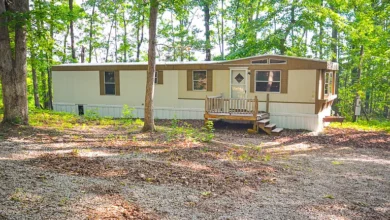
Tucked into the woods of Michaux State Forest in Fayetteville, Pennsylvania, this furnished four bedroom, two bath cabin sits just steps from the Totem Pole Playhouse and the golf course. A new roof protects a structure built in 1926. Hardwood floors run through the interior. A wood burning stone fireplace anchors the main living space, and a screened porch overlooks the second fairway, which is exactly the setting people picture when they imagine owning a mountain cabin in south central Pennsylvania.
It also carries one condition that changes how you buy it: the owner signs a ten year lease and must be a Pennsylvania resident. That single line moves this property out of ordinary real estate into a category most buyers have never encountered. Understanding it before you fall in love with the porch is the difference between a smooth purchase and a frustrating dead end.
Below is a full walkthrough of the cabin, followed by the practical guidance that matters most: how leasehold cabin financing actually works, insurance for a seasonal wood frame cabin in a forest setting, Pennsylvania property tax treatment, rental income considerations, and a due diligence checklist built specifically for a property like this.
A 1926 Cabin With Its Character Intact
Cabins from this era were built when Michaux was still recovering from the charcoal iron industry that stripped its slopes through the nineteenth century. The forest surrounding the property today is second growth that has been maturing for a century, and structures raised in the 1920s have grown into that landscape rather than being dropped onto it.
Hardwood flooring throughout gives the interior the warmth that vinyl and carpet never achieve in a cabin. The wood burning stone fireplace is the defining feature, and it is a working hearth rather than a decorative surround. In a mountain setting where autumn nights turn sharp in September and winter arrives in earnest, a stone fireplace burning real wood delivers both atmosphere and genuine heat.
The screened porch overlooking the second fairway is the room you would actually live in from May through October. Screened outdoor space in a Pennsylvania forest is not a luxury, because the same conditions that make the woods beautiful also produce mosquitoes and biting flies all summer. Screens convert a porch from a nice idea into daily usable square footage.
A new roof is worth calling out separately. Roof age is the single most common obstacle in insuring older recreational properties, and many carriers will decline coverage outright on an aging roof regardless of condition. A recent replacement removes that hurdle and eliminates the largest deferred maintenance item a century old cabin typically carries.
Four Bedrooms, Two Baths and Real Capacity
Four bedrooms with two full baths is generous for a cabin of this type. Most recreational cabins in the region run considerably smaller, which limits how you can use them. Four bedrooms makes extended family visits, hunting parties, golf weekends and multi family stays realistic rather than cramped.
The second full bath is the detail that makes group use pleasant. A single bathroom shared among eight people creates friction that no amount of scenery compensates for.
Heating is forced air, and there is no central cooling. In a shaded forest setting at elevation, summer heat is far more tolerable than in the valley towns below, and many cabin owners manage comfortably with window units and cross ventilation. If year round comfort matters to you, price a ductless mini split system into your budget. Mini splits are the standard solution for older cabins because they deliver both cooling and supplemental heat without retrofitting ductwork through century old framing.
The cabin also comes furnished, which for a recreational property is a substantial practical advantage. You arrive and use it rather than spending a season and several thousand dollars assembling a household from scratch.
Location: Michaux State Forest, Totem Pole Playhouse and Caledonia
Michaux State Forest covers roughly eighty five thousand acres across Franklin, Cumberland and Adams counties, spanning the South Mountain range. It is one of Pennsylvania’s most heavily used recreational forests, offering hiking, mountain biking, hunting, trout fishing and direct access to the Appalachian Trail, which runs through the forest.
The immediate surroundings are unusually rich for a cabin location. Totem Pole Playhouse is a professional summer theater with a long regional reputation. The adjacent golf course puts a round within walking distance. Caledonia State Park sits nearby with swimming, camping and picnic facilities. Chambersburg and Gettysburg are both a short drive, and the corridor places Harrisburg, Baltimore and Washington within a comfortable weekend range.
That combination is rare. Most forest cabins offer seclusion and nothing else. This one offers seclusion with theater, golf and state park amenities within minutes of the front door.
Understanding Leasehold Cabins: The Section That Matters Most
Here is the part that determines whether you can buy this property at all, and it deserves your attention before anything else.
Pennsylvania’s Department of Conservation and Natural Resources administers a long standing program under which privately owned cabins sit on leased state forest land. Owners hold title to the structure itself while leasing the ground beneath it from the Commonwealth. Leases run for defined terms, and the program carries residency and use restrictions. A listing requiring the owner to sign a ten year lease and to be a Pennsylvania resident is entirely consistent with this arrangement.
What that means in practice is straightforward but consequential. You are buying a building, not land. Your interest in the ground is a lease, renewable under the terms the Commonwealth sets. The lease governs what you may build, how you may alter the structure, whether you may sublet, and how the cabin may be transferred when you eventually sell.
Before proceeding, request the actual lease document and read every clause. Verify the remaining term and the renewal process. Confirm the annual lease fee and how it adjusts over time. Ask what happens at lease expiration and under what circumstances the Commonwealth may decline renewal. Clarify whether subletting or short term rental is permitted, since many state land leases prohibit commercial use entirely. Confirm the residency requirement and what documentation satisfies it. Ask how transfers to a buyer are approved and how long that approval takes.
These are not obstacles so much as facts to plan around. Cabin leases in Pennsylvania have supported families for generations, and many are passed down across decades. But a buyer who signs without reading the lease is buying a set of conditions sight unseen.
Financing a Leasehold Cabin
Conventional mortgage financing behaves very differently when the borrower does not own the land, and this is where most prospective cabin buyers hit their first wall.
Why Traditional Mortgages Often Do Not Apply
Standard mortgage products secure the loan against real property including land. When the land is leased from a government entity and the lease term is limited, most secondary market guidelines either exclude the property or impose requirements the lease cannot satisfy, such as a minimum remaining term extending well beyond the loan maturity. National lenders working from automated underwriting will frequently decline before a human ever reviews the file.
Portfolio Lenders and Local Banks
The practical solution is almost always a local bank or credit union that keeps loans on its own books. Portfolio lenders in Franklin, Cumberland and Adams counties have financed cabins in Michaux for decades and understand the lease structure. Because they are not selling the loan into the secondary market, they can underwrite the property, the lease and your financial profile directly.
Expect terms that differ from a conventional mortgage: a larger down payment, a shorter amortization period, and sometimes a rate premium reflecting the collateral structure. Approach at least two or three local institutions and ask specifically whether they lend on state forest leasehold cabins. The answer varies by bank and it is not something to assume.
Home Equity Financing on Your Primary Residence
For many cabin buyers, the cleanest path is a home equity loan or a home equity line of credit secured against a primary residence they already own. The advantages are meaningful. The collateral question disappears entirely because you are borrowing against a conventional property. Rates on home equity products are typically far better than unsecured borrowing. Closing costs are usually lower than a purchase mortgage. And approval does not depend on a lender’s willingness to evaluate a lease agreement.
A HELOC offers a draw period with interest only payments during the draw phase, which suits buyers who want flexibility for both the purchase and subsequent improvements. A fixed rate home equity loan offers payment certainty. Model either against rate movement, since most lines carry variable rates.
Cash Purchase
Recreational cabins in this price range frequently transact in cash for exactly these reasons. If you have liquidity available, a cash purchase eliminates the financing question entirely and materially strengthens your negotiating position. It also lets you close quickly, which matters when lease approval timelines are involved.
Refinancing After Purchase
Some buyers purchase with cash or short term financing and then arrange permanent financing with a local portfolio lender once ownership and lease transfer are complete. Discuss this sequence with your lender before you commit, so the plan is agreed rather than improvised.
Insurance for a Forest Cabin
Insurance for a seasonal wood frame cabin in a state forest involves considerations that a standard homeowners policy does not address, and buyers should obtain real quotes at the actual address during due diligence rather than after closing.
Seasonal and Secondary Residence Coverage
If the cabin will not be your primary residence, you need a policy written for a secondary or seasonal dwelling. Standard homeowners policies contain vacancy provisions that can suspend or limit coverage when a property sits unoccupied for extended periods. Confirm how your carrier defines occupancy and whether any seasonal endorsement is required.
Wildfire and Forest Exposure
Carriers evaluate wildfire risk based on vegetation density, defensible space around the structure, road access width, and distance to the nearest responding fire company. Cabins deep in forested terrain score differently from those near maintained roads. Maintaining cleared space around the structure and documenting it can meaningfully affect both eligibility and premium.
Wood Stove and Fireplace Underwriting
This one surprises buyers regularly. Carriers scrutinize solid fuel heating appliances closely. Expect questions about the fireplace, whether any insert or wood stove is installed, whether installation was professionally completed to code, and when the chimney was last inspected and cleaned. A current Level Two chimney inspection with camera scope is worth ordering before you apply for coverage, both for safety and because documentation often improves your underwriting outcome.
Replacement Cost on Century Old Construction
Rebuilding a 1926 cabin with a stone fireplace, hardwood floors and period wood construction costs considerably more per square foot than standard replacement calculations assume. Request adequate dwelling limits rather than accepting a default figure, and add contents coverage that reflects the furnishings included in the sale. Umbrella liability coverage is worth pricing as well, particularly if guests will use the property.
Leasehold Structures and Policy Structure
Tell your agent explicitly that the cabin sits on leased state forest land. Some carriers write this without issue, others do not. An independent agent who works with multiple carriers will find the right market far faster than a captive agent limited to one company. Also confirm whether the lease itself imposes any minimum insurance or liability requirements you must satisfy.
Pennsylvania Property Taxes and Ongoing Costs
Property tax treatment on leasehold cabins differs from ordinary fee simple ownership and should be confirmed directly rather than assumed. Contact the Franklin County assessment office and ask how the structure is assessed, what the current tax bill is, and whether the sale triggers reassessment. Pennsylvania property taxes fund county, municipal and school district budgets, and school tax is generally the largest component.
Build a complete annual operating budget before you buy. Include the state lease fee, property taxes, insurance premiums, electricity, heating fuel, water and septic maintenance, chimney cleaning, road and driveway maintenance including snow removal, and routine upkeep on a wood structure in a damp forest environment. Recreational property costs are modest compared to a primary residence, but they are not zero and they arrive whether you visit or not.
Rental Income: Verify Before You Count On It
A furnished four bedroom cabin beside a golf course and a professional summer theater looks like an attractive short term rental on paper. Before building any income assumption into your purchase decision, confirm three things in writing.
First, whether the lease permits rental at all. Many state land cabin leases restrict use to the leaseholder and guests and prohibit commercial rental outright. This is the controlling question and it must be answered first.
Second, whether Greene Township and Franklin County impose short term rental regulations, permit requirements or occupancy tax obligations.
Third, whether your insurance carrier will cover rental activity, since standard secondary residence policies exclude commercial use.
If rental is prohibited, that is not a reason to walk away. It simply means the cabin should be evaluated as a lifestyle purchase rather than an income property, and your budget should reflect that honestly.
Due Diligence Checklist
Order a full home inspection with attention to items specific to century old cabin construction: foundation and sill condition, framing and any evidence of insect or moisture damage, roof structure beneath the new covering, electrical service capacity and wiring type, and plumbing supply and waste materials.
Add a Level Two chimney and fireplace inspection, a septic system inspection with pumping if the cabin is on site, well flow and water quality testing if applicable, a radon test given Pennsylvania’s geology, and a wood destroying insect inspection.
Verify winterization arrangements and how the cabin has been maintained during unoccupied months. Frozen pipe damage is the most common loss on seasonal properties in this climate, and understanding the existing system matters.
Confirm road access and how the access road is maintained, including winter plowing responsibility. Verify utility service and internet availability, since connectivity varies considerably in the forest and affects both enjoyment and any remote work plans.
Most importantly, have a Pennsylvania real estate attorney review the lease agreement and the transfer process before you sign anything. This is not a transaction to complete without legal review, and the cost of an attorney is trivial against the cost of misunderstanding a ten year commitment.
Who This Cabin Suits
This property fits a Pennsylvania resident who wants a genuine forest retreat with real capacity, who values a working stone fireplace and a screened porch over granite countertops, and who is comfortable with the leasehold structure once they understand it fully.
It suits families who want a place their children will remember, golfers who want a course within walking distance, hikers drawn to the Appalachian Trail, hunters with Michaux access, and anyone who has been quietly wanting a cabin for years and finally has the means to act.
It does not suit buyers seeking land ownership, conventional mortgage simplicity, or a rental income machine. Those are the honest limits, and knowing them before you tour is the surest path to a purchase you will not regret.
If a furnished 1926 cabin in Michaux State Forest with a new roof, four bedrooms and evenings on a screened porch above the second fairway sounds like what you have been looking for, the practical next steps are clear: request the full lease document and have an attorney review it, confirm the residency requirement, call two or three local portfolio lenders about financing, obtain an insurance quote at the actual address, verify the tax figure with Franklin County, and schedule a walkthrough. Cabins like this rarely reach the open market, and when they do, they find their owner quickly.
-
-
-
-
-
-
-
-
-
-
-
-
From ZILLOW