Craftsman Island Home With Puget Sound, Mount Rainier and Seattle Skyline Views: A Complete Buyer’s Guide
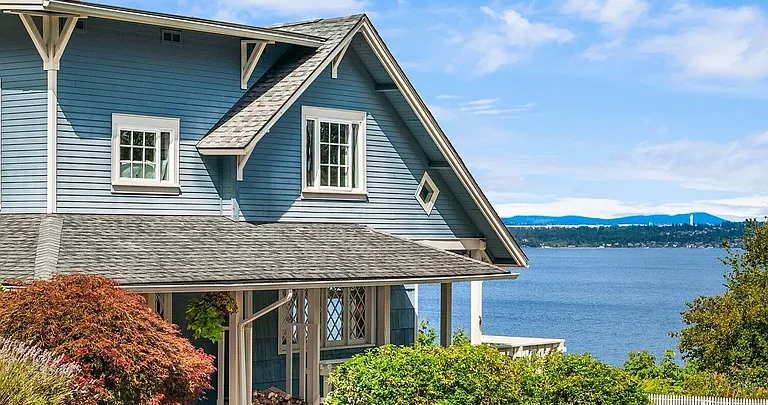
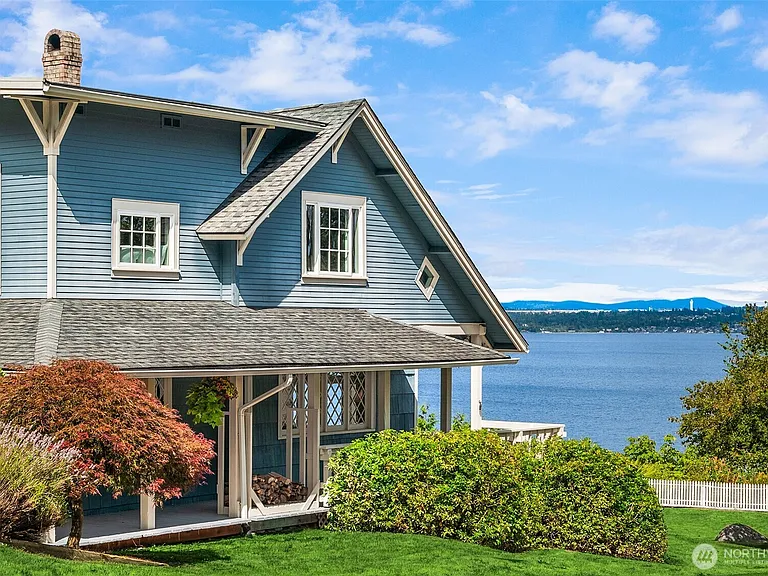
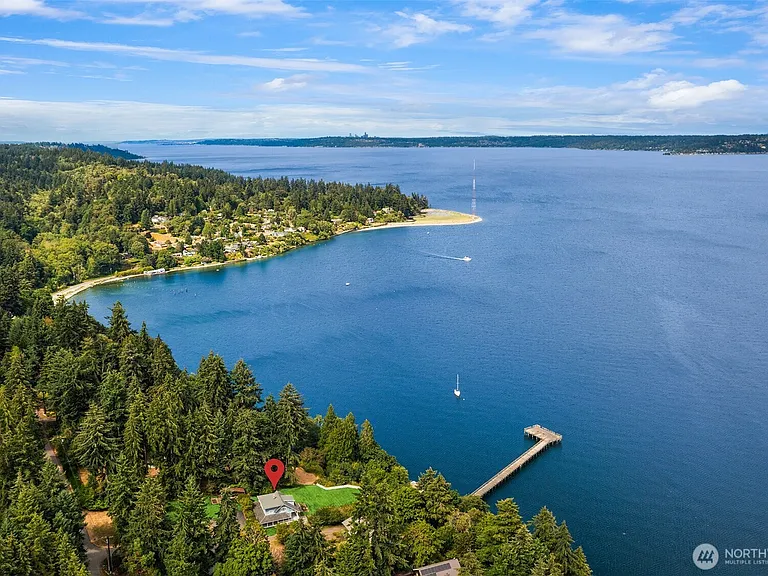
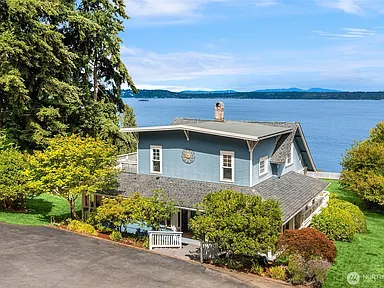
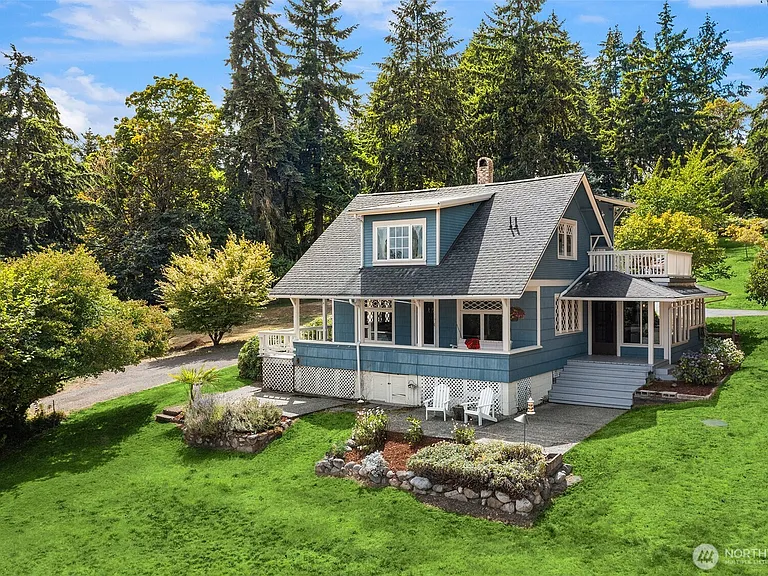
There is a specific kind of Pacific Northwest property that people spend years searching for and rarely find. A genuine Craftsman with its original character intact. Water on the horizon. Mount Rainier standing above the southern skyline on clear days. The lights of Seattle glittering across the Sound after dark. And all of it on an island, where the pace slows the moment the ferry pulls away from the mainland.
This home delivers exactly that combination. Below is a full walkthrough of the property, followed by the practical guidance that matters most for buyers in this market: financing a waterfront-view home, insuring against flood and earthquake risk in the Puget Sound region, understanding Washington property taxes, evaluating the detached workshop for accessory dwelling potential, and the due diligence steps that protect you before closing.
Authentic Craftsman Character
The Craftsman movement arrived in the Pacific Northwest at exactly the right moment. Abundant old-growth timber, a strong local building tradition and a regional appetite for honest materials produced some of the finest Craftsman housing stock in the country. A century later, homes that retained their original detail are increasingly scarce, because decades of remodeling stripped character from most of them.
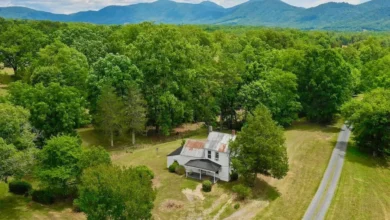
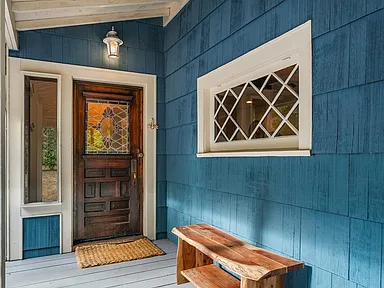
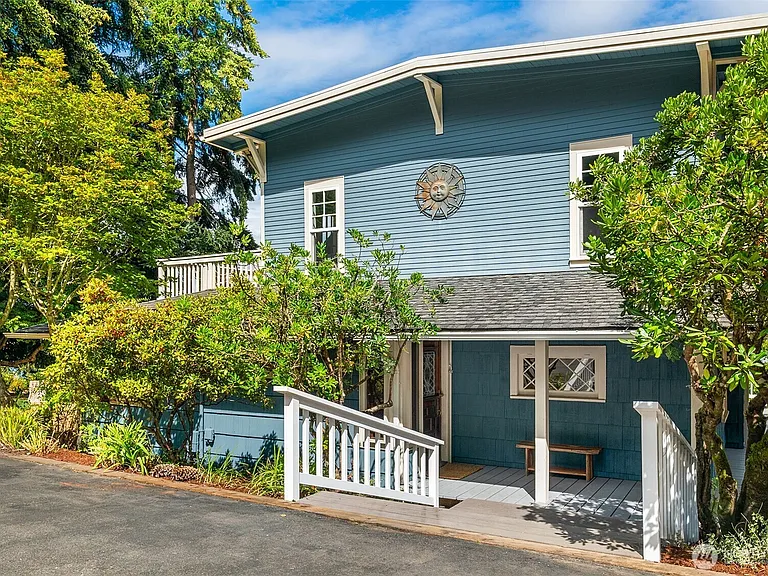
This one kept it. Original woodwork runs throughout the interior, the kind of trim, casing and built-in millwork that no builder produces today at any accessible price. Decorative windows filter light in ways that plate glass cannot. A brick fireplace anchors the main living space, doing the work fireplaces were built to do in a climate of long gray winters.
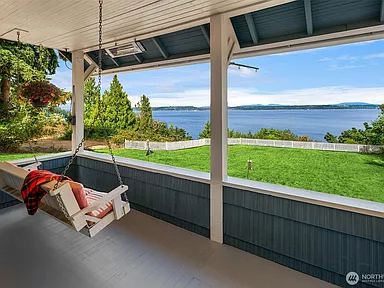
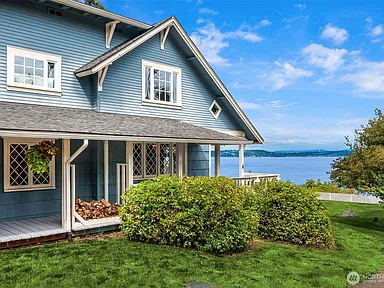
The covered porch is the signature Craftsman gesture, and here it earns its keep. Shelter from Pacific Northwest rain means the porch stays usable nearly year-round, functioning as a genuine outdoor room rather than seasonal decoration. It is where you drink coffee while fog lifts off the water and where you watch weather move across the Sound.
Light, Views and the Master Suite
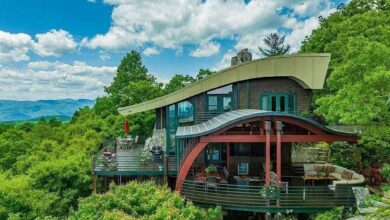
Large windows fill the living spaces with natural light and frame the water views that define the property. In a region where winter daylight is limited and precious, generous glazing is not a luxury feature. It materially affects how a home feels from November through March.
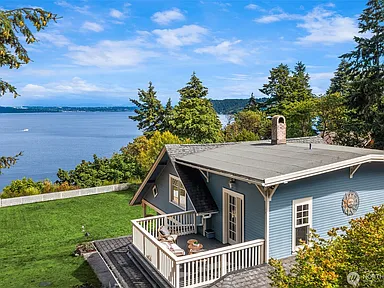
The master bedroom includes a sitting area and a private porch overlooking the water. This is the detail that separates a nice house from a memorable one. Waking to Puget Sound, stepping directly outside without crossing the rest of the home, watching ferries and freighters move across the channel from your own private vantage point.
Updated flooring and a remodeled bathroom add modern comfort without erasing the home’s classic character, which is the balance that historic buyers care most about. Nobody wants a museum. What they want is period integrity in the spaces that matter visually and contemporary function in the spaces that matter practically.
Grounds, Gardens and the Detached Workshop
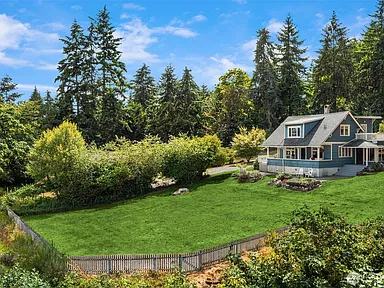
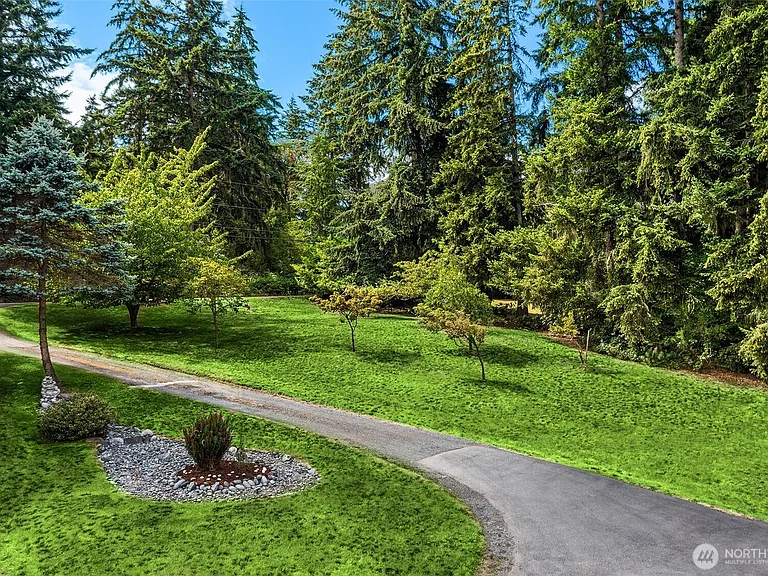
Generous lawns, mature landscaping, gardens and fruit trees create an outdoor setting that took decades to establish. Mature plantings are genuinely irreplaceable. A newly built home can install landscaping, but it cannot install thirty-year-old trees, established garden beds or fruit trees at productive maturity.
The detached workshop is the property’s flexible asset. As built, it serves storage, hobbies and creative projects. Woodworking, boat maintenance, a studio, a home gym, seasonal gear for an island lifestyle. But detached structures in Washington also carry real potential value as accessory dwelling units, and that possibility deserves careful investigation.
Washington State has moved aggressively to expand ADU allowances through recent legislation, requiring many jurisdictions to permit accessory dwellings in areas where they were previously restricted. Rules vary significantly by county and by whether the parcel sits inside an urban growth area. Before assuming conversion is possible, confirm with the county planning department whether the parcel qualifies, what setback and septic capacity requirements apply, and whether the existing structure could meet residential code. If conversion is viable, an ADU meaningfully changes the property’s income profile and long-term value.
Island Living and Beach Access
Close beach access makes kayaking, wildlife watching and coastal activities part of ordinary daily life rather than planned excursions. Puget Sound wildlife is genuinely remarkable: seals, sea lions, bald eagles, herons, and orca pods that move through the channels seasonally.
Island living carries a distinct rhythm. Ferry schedules structure the day. Grocery runs require planning. Contractors charge more and schedule further out because of travel time. In exchange you get quiet, community, dark skies and a buffer between yourself and metropolitan density that no mainland suburb can replicate.
Buyers new to island life should ride the ferry at commute hours before committing. The lifestyle suits many people beautifully and frustrates others completely, and the difference usually comes down to how you feel about the boat.
Financing a Puget Sound View Property
Washington’s Puget Sound market carries elevated pricing, and financing strategy deserves attention early rather than after you write an offer.
Conforming, High Balance and Jumbo Loans
Several Puget Sound counties carry high-balance conforming loan limits above the national baseline, which is meaningful because high-balance conforming loans typically price better than jumbo products. Confirm the current limit for the specific county before assuming a purchase requires jumbo financing, since falling just under the threshold can save real money over the life of the loan.
If the purchase does exceed conforming limits, expect stricter jumbo underwriting: higher credit score requirements, lower debt-to-income ceilings, larger reserve requirements and more extensive documentation. Compare offers from at least three lenders, including a regional bank or credit union with island market experience alongside national originators.
Down Payment and Occupancy Classification
Your rate depends heavily on how the lender classifies the property. A primary residence carries the best pricing and lowest down payment requirements. A second home typically requires ten to twenty percent down with a modest rate premium. An investment property generally requires twenty to twenty-five percent down at the highest rate of the three. If you intend to rent the workshop as an ADU or list any portion of the property, disclose that intent to your loan officer up front.
VA, FHA and First-Time Buyer Programs
Washington has a substantial military population, and VA loans remain one of the strongest financing tools available, offering zero down payment for eligible service members and veterans with no monthly mortgage insurance. FHA loans serve buyers with lower credit scores or smaller down payments, though FHA appraisals apply stricter property condition standards that older homes sometimes struggle to meet. The Washington State Housing Finance Commission also administers down payment assistance programs worth reviewing for eligible buyers.
Appraisal Considerations on Older View Homes
View value is real but difficult to quantify, and appraisers vary in how they credit it. Century-old construction on an island with limited comparable sales compounds the challenge. Request an appraiser with genuine local experience, and build appraisal contingency language into your contract that preserves your ability to renegotiate rather than forcing an immediate cash gap.
Insurance: Flood, Earthquake and Older Home Coverage
Insurance in this market involves three separate questions, and buyers who address all three during due diligence avoid unpleasant surprises.
Flood Insurance and Coastal Exposure
Order the FEMA flood map determination for the exact parcel. Proximity to beach access does not automatically place a home in a special flood hazard area, particularly on elevated bluff sites, but verification matters. If any portion sits within a mapped hazard zone, flood insurance becomes mandatory for federally backed financing. Premiums under current risk rating methodology depend on elevation, distance to water, foundation type and replacement cost, and an elevation certificate from a licensed surveyor frequently reduces the premium substantially.
Earthquake Coverage
The Puget Sound region sits in seismically active territory, and standard homeowners policies exclude earthquake damage entirely. Earthquake coverage requires a separate policy or endorsement, and premiums depend heavily on construction type, foundation condition and whether the home has been seismically retrofitted.
Older homes frequently sit on unreinforced foundations without bolting or cripple wall bracing. Seismic retrofitting is one of the highest-return improvements available on a century-old Pacific Northwest home. It reduces earthquake insurance premiums, meaningfully improves structural safety, and costs far less than most buyers expect. Have the foundation evaluated during inspection and price a retrofit as part of your acquisition budget.
Insuring a Century-Old Home
Standard policies calculate dwelling coverage using conventional building costs, but replicating original Craftsman woodwork, period windows and brick masonry costs multiples of ordinary construction. Request adequate replacement cost limits and ask carriers about older home or historic home endorsements. Also confirm coverage for the detached workshop under separate structures, and price umbrella liability coverage given the acreage and water proximity.
Washington Property Taxes and Ownership Costs
Washington has no state income tax, which shifts revenue burden toward property tax and sales tax. Property taxes are assessed at the county level and vary meaningfully by taxing district, school levy and special assessments.
Request the current tax statement for the parcel and confirm with the county assessor how sales affect assessment. Ask whether any open space, timber or agricultural classification applies to the land, whether it transfers, and what filing requirements a new owner must meet. Washington also offers a senior citizen and disabled persons property tax exemption for qualifying owners, which is worth reviewing if applicable.
Budget the full operating picture: property taxes, homeowners insurance, separate earthquake and possibly flood policies, heating, well and septic maintenance if the property is not on public systems, ferry costs, and the elevated contractor pricing that island locations carry.
Due Diligence Before You Close
Order a comprehensive home inspection and supplement it with specialists appropriate to older waterfront-adjacent construction. That means a structural evaluation of the foundation with specific attention to seismic condition, a sewer scope if connected to public sewer, septic inspection and pumping if on-site, well flow and water quality testing where applicable, roof evaluation, and chimney and fireplace inspection.
Homes built before 1978 warrant lead paint disclosure review, and pre-1980 construction warrants asbestos awareness in flooring, insulation and siding materials. Neither is disqualifying, but both affect renovation planning and cost.
For any property near a bluff or shoreline, geotechnical stability deserves attention. Ask whether the parcel falls within a mapped landslide hazard, erosion hazard or critical area under the county critical areas ordinance, since those designations restrict construction, vegetation removal and shoreline work. If the property includes or abuts tidelands, confirm ownership status, because Washington tideland ownership is genuinely complicated and the answer affects both use rights and value.
Confirm legal access with recorded easements, order a current survey, review it for encroachments, and purchase owner’s title insurance. Verify internet service availability, since island connectivity varies and remote work capability affects both daily life and resale appeal.
Who This Property Suits
This home rewards a specific buyer. Someone who wants authentic period character rather than a builder’s interpretation of it. Someone who values a view that changes hourly with tide, weather and light. Someone who sees a detached workshop and immediately pictures what could happen inside it. And someone who understands that island living is a genuine lifestyle choice rather than a scenic backdrop.
What it does not suit is a buyer who wants maintenance-free convenience and mainland immediacy. Century-old homes ask for attention. Islands ask for patience. Both give back proportionally.
If Puget Sound water, Mount Rainier on the horizon and the Seattle skyline after dark sound like the view you want from your own porch, the practical next steps are clear: get pre-approved with a lender experienced in the local market, obtain insurance quotes including earthquake and flood determination at the actual address, verify the tax assessment with the county, confirm ADU feasibility for the workshop with county planning, and schedule a showing. Original Craftsman homes with views like this do not surface often, and they rarely wait.
Watch Via Zillow