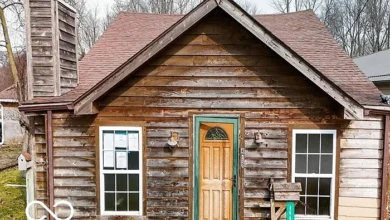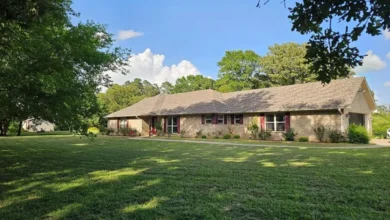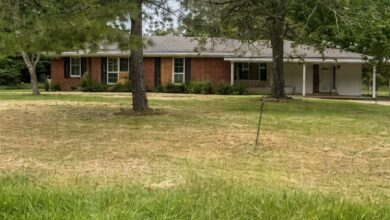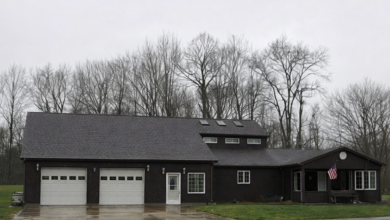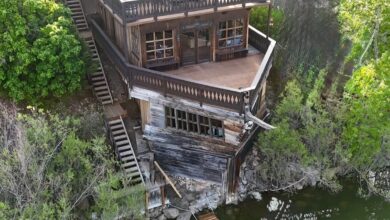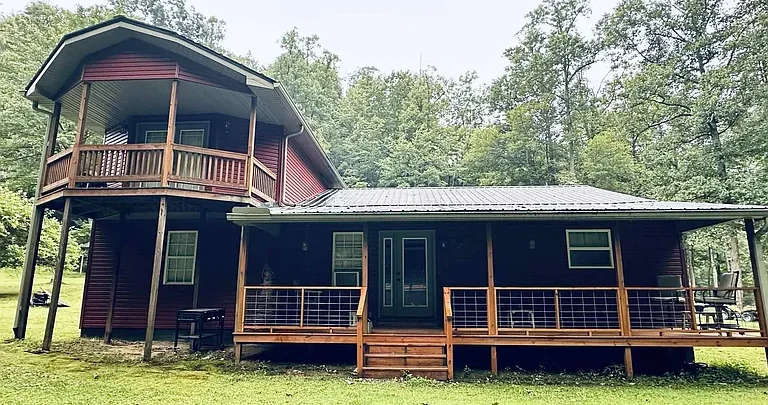
Some homes sell you on a kitchen island. This one sells you on the sound of water moving past your bedroom window at two in the morning. Sitting on eight wooded acres along a river in Diana, West Virginia, this four-bedroom, two-bath home covers 2,304 square feet and carries an asking price of two hundred twenty thousand dollars — a number that works out to roughly ninety-five dollars per square foot, land included.
For buyers who have spent months scrolling past overpriced suburban tract houses, a property like this reframes the entire conversation. You are not buying a lot line and a fence. You are buying river frontage, a stream, mature woods, and enough acreage to never see a neighbor’s porch light.


A Riverfront Setting in the Heart of Almost Heaven
Diana sits in Webster County, in the mountainous middle of West Virginia. This is real Appalachian country — winding two-lane roads, hardwood ridges that turn copper in October, and rivers that run clear enough to see the bottom. The nearest towns are small, the traffic is nonexistent, and the night sky is genuinely dark.
The property records list the view as both mountain and river, with waterfront features that include river frontage and a stream or creek crossing the land. The eight acres are described as wooded, sloped, and rural, with a portion mapped in a flood plain — a detail that matters and that we will come back to in the due diligence section below.
The listing agent describes it plainly: fall asleep to the sound of the river, or to rain drumming on the metal roof. That is not marketing fluff. On a metal roof, rain is a genuine feature.
Inside the Home: Four Bedrooms and Room to Finish
The house was built in 1982 as a two-story bungalow-style home, framed with vinyl siding over a block foundation. Newer additions have expanded and modernized much of the interior, while one original section remains a project — more on that in a moment.
The Upstairs Bedroom with a Private Balcony
The upper-level bedroom measures thirteen by fifteen feet and comes with two features that rarely appear together at this price point: a private balcony and an attached bathroom with a whirlpool tub. Waking up, stepping onto your own balcony, and looking out over the river and the treeline is the kind of daily ritual that justifies a rural move all by itself.


The Main-Level Bedrooms
Three additional bedrooms sit on the first floor, all with wood flooring and ceiling fans:
- A generous second bedroom at fifteen by eighteen feet, with a walk-in closet
- A third bedroom at ten by fifteen feet
- A fourth bedroom at nine by fifteen feet
That second bedroom is larger than the upstairs primary, which gives buyers real flexibility. It can serve as a main-floor primary suite for anyone who would rather not climb stairs, or as a home office, guest suite, or studio.
Kitchen, Living Room, and the Pellet Stove
The kitchen runs fourteen by seventeen feet with a dining area and vinyl flooring, and it houses the home’s heating centerpiece: a pellet stove with a blower. In a rural West Virginia winter, a pellet stove is not a decorative touch. It is a serious cost-control strategy. Pellet fuel is typically far cheaper per unit of heat than propane or electric resistance heating, and because the stove sits in the kitchen, the warmest room in the house is also the room where people naturally gather.
The living room measures thirteen by fourteen feet and opens onto a balcony and deck. Supplemental heat comes from a wall furnace and space heating, with ceiling fans handling summer air movement.
The Unfinished Section: The Honest Part of the Listing
The seller is upfront that the original section of the house needs its subfloor and flooring replaced. Notably, the flooring material has already been purchased and is included. There is also a new laundry room already wired with two hundred twenty volt service for a dryer, waiting only on washer plumbing so laundry can move out of the foyer.
This is exactly the profile that experienced buyers hunt for: a home where the expensive systems are handled and the remaining work is visible, finite, and largely cosmetic or structural at the floor level. It is also the reason the financing conversation on this property looks different from a turnkey purchase.
The Land, the Outbuildings, and the Playhouse
Eight acres is enough to do almost anything a rural buyer dreams about. Garden beds, chickens, a workshop, target practice, a fire pit ring by the water, ATV trails through the woods. The parcel carries no zoning designation and no homeowners association, which means no monthly dues and no architectural review board telling you what color to paint a shed.
Existing structures on the property include:
- A concrete block garage
- A one-car carport
- A storage shed and outbuilding
- A playhouse with two lofts — a genuinely charming feature for families with kids
The home also includes a covered porch and deck, exterior lighting, and a private yard area. There is no fencing, so anyone bringing livestock or dogs should budget for that separately.
Systems, Utilities, and What They Mean for a Rural Buyer
The home runs on well water and a septic tank, with two hundred amp electrical service and a metal roof over the whole structure. Each of these deserves a moment of attention.
A metal roof is arguably the single most valuable component on any rural property. Properly installed standing seam or ribbed metal roofing routinely lasts forty to seventy years, sheds snow load efficiently, and resists ember ignition. Many homeowners insurance carriers offer premium credits for impact-resistant or metal roofing, so it is worth asking your agent directly when you request quotes.
Two hundred amp service is modern capacity. It comfortably supports a well pump, electric dryer, workshop tools, and future additions like a mini-split heat pump or an electric vehicle charger without a costly panel upgrade.
Well and septic mean no monthly water bill and no sewer bill — but they also mean you are the utility company. Budget for periodic septic pumping every three to five years and annual water testing.
What It Actually Costs to Own This Property
Property Taxes
This is where West Virginia quietly beats almost every state in the country. The most recent annual property tax on this parcel came in at two hundred twenty five dollars. Not per month — per year. The public tax history shows assessments in the mid thirty thousands and annual bills that have hovered between roughly one hundred eighty and two hundred fifty dollars for more than a decade.
Buyers should expect reassessment after a sale at a higher price, so the future bill will likely rise. Even so, the starting point is dramatically lower than comparable acreage in most of the Northeast, Midwest, or Mountain West.
Homeowners Insurance and the Flood Plain Question
Standard homeowners insurance does not cover flood damage. Ever. Because part of this parcel is mapped in a flood plain, any serious buyer should do three things before removing contingencies:
- Pull the current FEMA flood map for the parcel and confirm which flood zone the structure itself sits in, not just the acreage
- Request an elevation certificate, which can dramatically lower flood insurance premiums if the building is elevated above base flood elevation
- Get written quotes from both the National Flood Insurance Program and private flood insurance carriers, since private markets often price competitively on rural riverfront
Riverfront living and flood risk are two sides of one coin. The answer is not to walk away — it is to price the risk accurately before you write an offer.
Estimated Monthly Payment
At the asking price, estimates put the monthly cost in the range of roughly thirteen hundred to sixteen hundred dollars including principal, interest, taxes, and insurance, depending on down payment and prevailing mortgage rates. Because rates move constantly, anyone shopping seriously should lock in a rate quote from at least three lenders and compare annual percentage rate rather than headline rate — origination fees and points can shift the real cost by thousands over the life of the loan.
Financing: Why This Listing Says Cash or Conventional Only
The agent notes that the seller will accept cash or conventional financing only. That restriction exists because government-backed programs impose minimum property condition standards. A missing subfloor in a section of the house will typically fail an FHA, VA, or USDA appraisal inspection, and appraisers on those programs are required to flag conditions affecting safety, security, and soundness.
That does not mean renovation buyers are locked out entirely. Buyers in this situation generally have several paths:
- Conventional financing with a lender willing to close on the property as-is, followed by cash or a personal loan for the flooring work
- A conventional renovation loan such as Fannie Mae HomeStyle, which rolls purchase price and renovation budget into one mortgage — worth asking the seller about, since it is technically conventional financing
- A short-term hard money or bridge loan, used to acquire and complete the work, then refinanced into a standard conventional mortgage
- Cash purchase followed by a HELOC, tapping the equity after repairs to fund further improvements at a lower rate than unsecured credit
An FHA 203k renovation loan would ordinarily be the obvious tool for a property like this, and it is worth a conversation — but the seller’s stated terms should be respected and clarified through your agent before you invest in an appraisal.
Income Potential on the River
Rural West Virginia riverfront has become a legitimate short-term rental market. Anglers, hunters, paddlers, leaf-peepers in October, and remote workers seeking quiet all book properties like this. A four-bedroom home with a private balcony, whirlpool tub, and river access photographs extremely well.
Before counting on rental income, verify county-level short-term rental rules, confirm internet service availability at the address, and check whether your insurance carrier requires a landlord or short-term rental endorsement. Standard homeowners policies typically exclude commercial rental activity.
The Due Diligence Checklist Every Rural Buyer Needs
- Order a full water potability and mineral test on the well
- Have the septic system inspected and located, and request pumping records
- Commission a boundary survey — eight wooded acres without recent survey markers can hold surprises
- Investigate mineral and gas rights, which in West Virginia are frequently severed from surface ownership
- Confirm road maintenance responsibility and legal access to the parcel
- Verify internet options, including satellite and fixed wireless, if you work remotely
- Have a structural inspector evaluate the subfloor work scope and provide a written repair estimate
The Bottom Line
This is not a move-in-perfect house, and it does not pretend to be. It is eight riverfront acres, a metal roof, four bedrooms, a whirlpool tub, a balcony over the water, and a heating bill controlled by a pellet stove — offered at a price that would not buy a starter condo in most metropolitan markets.
For a buyer with a saw, a weekend habit, and a tolerance for gravel roads, that trade looks very good indeed. The listing has already drawn thousands of views and hundreds of saves in under a month, which tells you the market agrees.


Interested in touring 856 Removal Rd or want more details on the Diana area? Reach out to the listing agent below in ZILLOW